Understanding Seasonal Menus & Local Ingredients
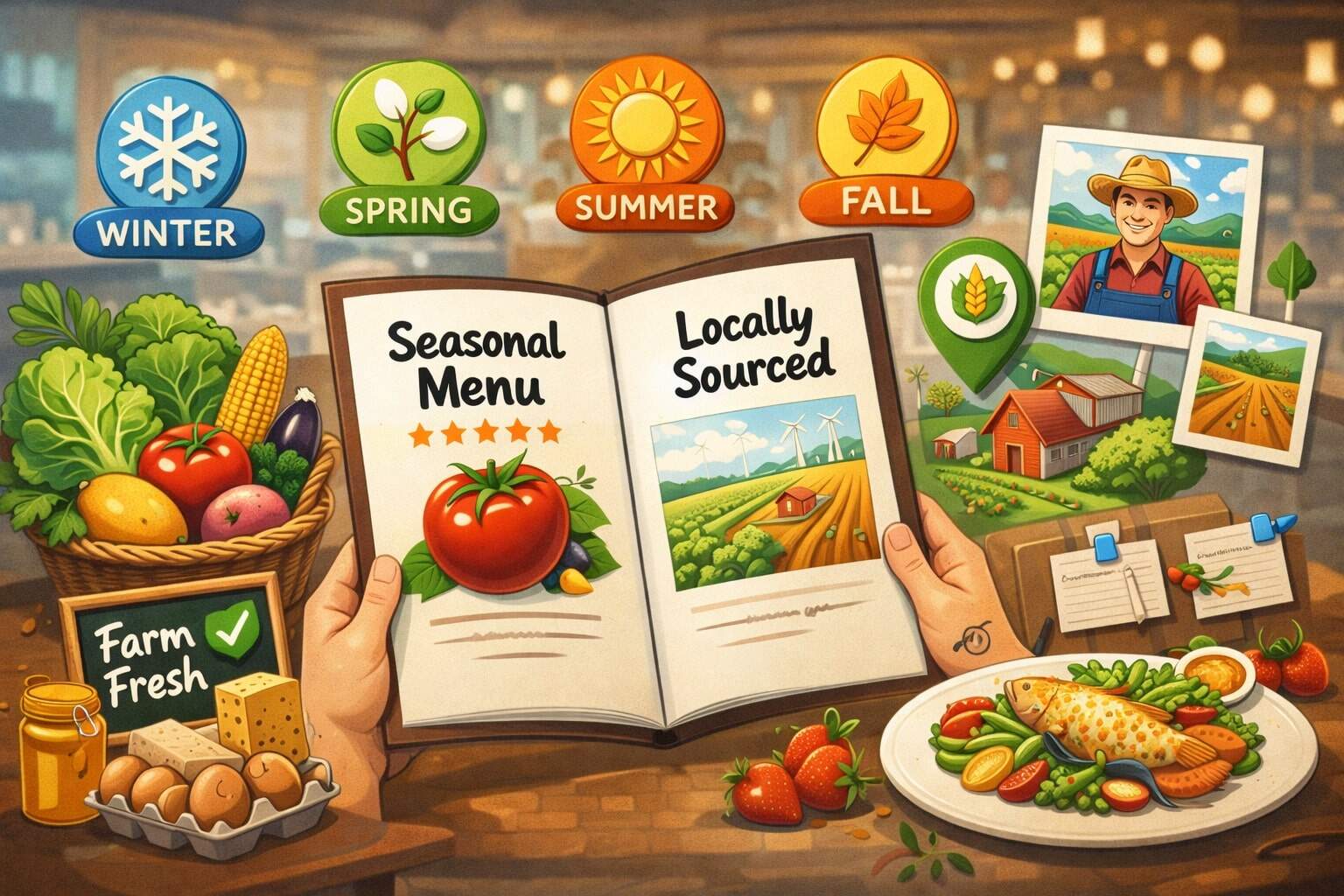
Seasonal menus aren’t just a restaurant trend—they’re a practical, community-centered way to cook, plan, and eat better in Delaware. When you build seasonal menus, you’re aligning dishes with what farms, orchards, fisheries, and producers can supply at peak flavor.
That often means brighter taste, better texture, and simpler cooking because ingredients don’t need as much “fixing.” Just as importantly, seasonal menus help you stabilize purchasing decisions: when tomatoes are abundant, you feature them; when they’re scarce, you pivot. This rhythm reduces last-minute substitutions that frustrate customers and throw off costs.
Delaware’s size makes local sourcing feel surprisingly close. You can reach growers in Kent and Sussex counties, orchards and vegetable farms inland, and coastal seafood suppliers near the bays and Atlantic shoreline. This tight radius creates a strong case for local ingredients: shorter transport time, more transparency, and fresher deliveries.
For restaurants, caterers, cafés, schools, and even home cooks, seasonal menus also create a story—“why this dish is here right now”—that builds customer loyalty and supports regional agriculture.
In this guide, you’ll learn how to plan seasonal menus around Delaware’s growing seasons, how to source local ingredients consistently, how to price and prepare smartly, and how to stay compliant with food safety expectations.
You’ll also get a forward-looking view of where seasonal cooking is headed, including climate realities and tech-driven sourcing.
What “Seasonal Menus” Really Mean (and Why They Work)
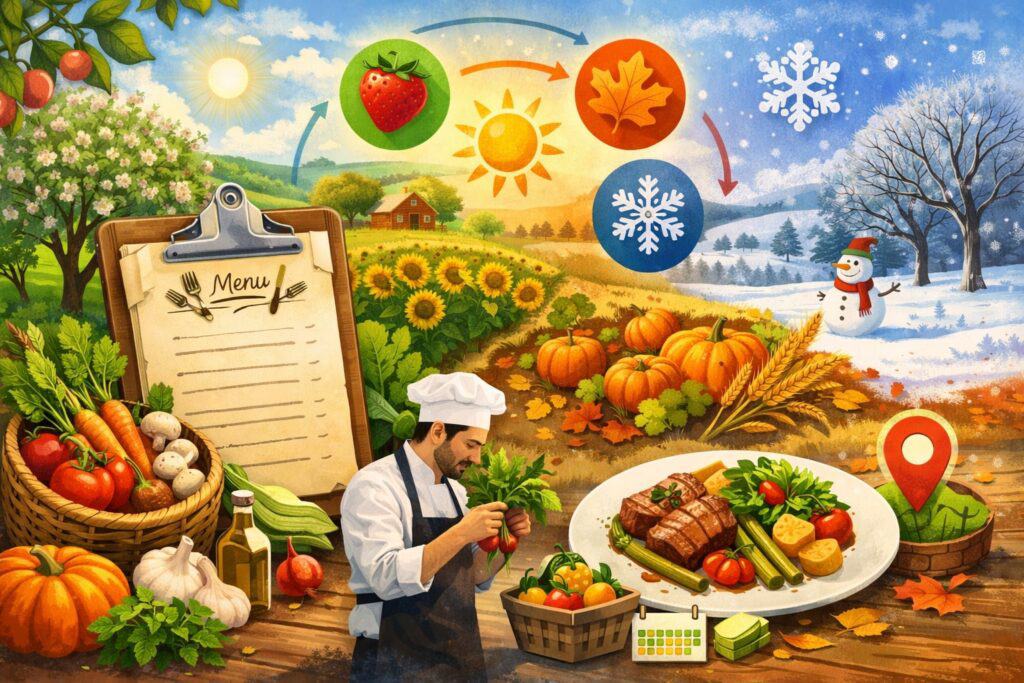
Seasonal menus are a system, not a single “farm-to-table” label. At the simplest level, they mean rotating dishes based on what’s naturally available and at its best during a particular time of year.
But the most successful seasonal menus go deeper: they’re designed with supply patterns, kitchen capacity, customer expectations, and profit targets in mind. You’re not just swapping strawberries for apples—you’re building a menu strategy that works across the year.
The biggest advantage is quality. Ingredients harvested close to peak ripeness tend to taste better because they haven’t been picked early to survive long-distance shipping.
That alone can reduce the need for heavy sauces and complicated preparations. A seasonal tomato doesn’t need much beyond salt, good oil, and balance. A just-harvested sweet corn can be the headline of a dish rather than a side note.
Seasonal menus also support cost control. When an item is in season locally, supply is higher and prices are often more stable. That doesn’t mean every local product is cheap, but it usually means less volatility and fewer surprise spikes.
Seasonal planning makes it easier to design specials, bundle ingredients across multiple dishes, and reduce spoilage. You can also align labor with the season: summer might emphasize fresh, quick assembly; winter might lean into braises, soups, and preserved components that stretch prep efficiency.
Finally, seasonal menus are great marketing—without being gimmicky. Customers increasingly value transparency and locality, especially when it’s explained clearly.
Instead of listing dozens of farm names, focus on a few meaningful stories: a rotating “Delaware harvest bowl,” a weekly seafood feature, or a dessert that follows orchard availability. The goal is credibility: local ingredients as a real operational practice, not just a menu slogan.
Delaware’s Seasonal Ingredient Rhythm (How to Think in Seasons)
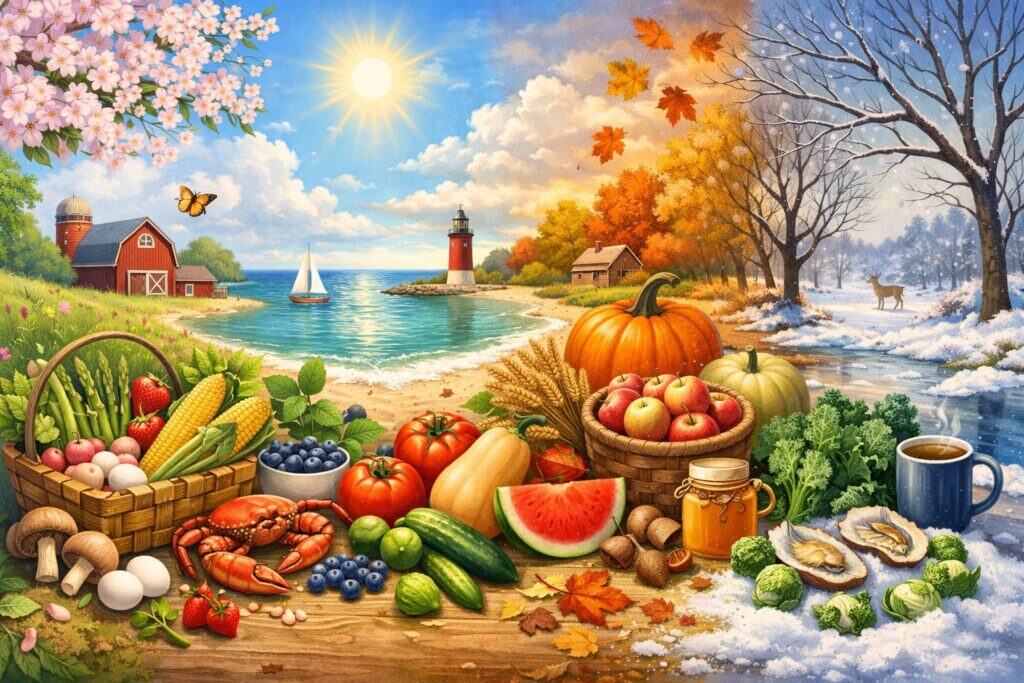
Delaware’s climate and geography create a distinct seasonal pattern: early spring greens and asparagus, peak summer tomatoes and stone fruit, fall apples and squash, and winter roots plus greenhouse items.
The key to building reliable seasonal menus is to think in “ingredient families” (greens, berries, tomatoes, roots) rather than obsessing over one exact item. That way, if one crop is late or limited, you can swap within the family without rewriting the whole menu.
Another Delaware-specific advantage is the mix of inland farms and coastal seafood access. This supports seasonal menus that blend land and sea: summer can highlight crab-forward dishes and fresh vegetables; fall can pair oysters with apples, herbs, and hardy greens; winter can emphasize clams, chowders, and preserved produce.
When you plan seasonal menus, use three layers:
- Core seasonal anchors (the ingredients that define the season),
- Flexible supporting ingredients (items you can switch easily), and
- Shelf-stable or preserved backups (pickles, frozen fruit, sauces, stocks).
This structure keeps local ingredients central while protecting you from supply gaps.
Spring in Delaware: Tender Greens, Bright Herbs, and Early Crops
Spring is the season of freshness and speed. Your seasonal menus should aim for clean flavors, crisp textures, and lighter cooking methods.
Delaware spring typically supports a strong selection of leafy greens (spinach, lettuces, kale), herbs (parsley, chives, mint), and early vegetables (radishes, spring onions, peas, asparagus in many regional systems). Eggs and early dairy from nearby producers can also feel especially relevant in spring menus.
A smart spring strategy is to build dishes around “green + acid + crunch.” Think salads, grain bowls, and sandwiches that showcase local ingredients with minimal transformation.
Spring soups also work well—like pea or asparagus-style soups—because they can be prepped efficiently while still tasting seasonal. Another spring menu win is herb-driven sauces: salsa verde, chimichurri-style blends, and green goddess-inspired dressings that help you use surplus herbs.
From an operations perspective, spring is also the time to reset your pantry for the year. Add pickled onions, quick pickles, and herb oils that can roll into summer seasonal menus.
The goal is to create momentum: spring ingredients are delicate, so you want faster inventory turns, smaller but more frequent deliveries, and flexible dishes that allow substitutions without disappointing customers.
Summer in Delaware: Peak Produce, Coastal Seafood, and Crowd-Pleasers
Summer is where seasonal menus shine the brightest. This is peak time for tomatoes, cucumbers, peppers, sweet corn, berries, melons, and a wide variety of herbs.
With coastal access, summer can also highlight seafood-forward plates that match the season’s lighter mood. Summer customers often want freshness, cold or chilled options, and shareable items that feel celebratory.
Design summer seasonal menus around “high-impact raw and lightly cooked.” Tomato salads, corn-forward sides, berry desserts, and grilled vegetables are natural fits. The trick is to avoid overloading your menu with too many similar items.
Instead, pick a few hero ingredients and use them across multiple dishes: tomatoes in a salad, a sauce, and a sandwich; berries in a parfait, a tart, and a beverage. That reduces waste while keeping the menu cohesive.
Summer is also prime time for beverages that reinforce local ingredients: fruit shrubs, herb lemonades, iced teas, and seasonal mocktails. If you’re a restaurant or café, these drinks become high-margin menu items that anchor your seasonal story.
For home cooks, summer is the best season to preserve: freeze berries, roast and freeze tomatoes, pickle cucumbers, and make herb pastes. Those preserved components make fall and winter seasonal menus easier and more cost-effective.
Fall in Delaware: Orchard Fruit, Squash, and Comfort-Forward Flavors
Fall seasonal cooking is about warmth and depth without losing freshness. Delaware fall often supports apples, pears, pumpkins, winter squash, sweet potatoes, and hearty greens. Mushrooms and herbs also become key flavor tools.
Seasonal menus in fall can lean into roasting, baking, and pan-searing, with spice profiles that feel comforting—think cinnamon, nutmeg, sage, thyme, and toasted seeds.
A strong fall move is to build dishes around apples and squash because they’re versatile and hold well. Apples can appear in salads, sauces, glazes, desserts, and beverages. Squash can become soups, purees, roasted sides, fillings, and even baked goods. This versatility makes fall seasonal menus easier to execute while maintaining variety.
Fall is also an ideal time to plan “transition dishes” that bridge summer to winter. For example, a late-season tomato sauce can pair with roasted squash; a grilled vegetable plate can shift into a warm roasted vegetable bowl. This reduces the shock of sudden menu changes and helps customers stay engaged.
Operationally, fall is where you should start leaning more on preserved components. If you made summer tomato confit or frozen berries, now is when those items can add complexity to fall seasonal menus without forcing you to buy out-of-season produce.
Winter in Delaware: Roots, Braises, and Smart Use of Preservation
Winter challenges your reliance on fresh produce, but it also makes seasonal menus more distinctive. Winter is the season of root vegetables (carrots, beets, turnips), potatoes, onions, cabbage-family vegetables, stored squash, and greenhouse greens when available. Winter also supports hearty proteins and seafood-based comfort dishes that match colder weather.
The core winter strategy is: texture + richness + acidity. Braises, stews, chowders, and roasted roots can be elevated with bright acids like vinegar reductions, pickled vegetables, citrus when used thoughtfully, and fermented sauces. If your pantry is prepared, winter can feel abundant rather than restrictive.
For restaurants, winter seasonal menus often benefit from fewer, more focused items that execute consistently. Rotate soups weekly, feature a signature braise, and use a “winter vegetable medley” that changes based on availability.
For home cooks, winter is perfect for batch cooking and freezer strategy: make stocks, sauces, and stews that transform into multiple meals.
Winter is also where storytelling matters. Customers appreciate seeing “Delaware winter harvest” messaging because it signals intention and skill. It tells people you’re using local ingredients thoughtfully, not just copying summer dishes with inferior substitutes.
How to Source Local Ingredients in Delaware Without Chaos
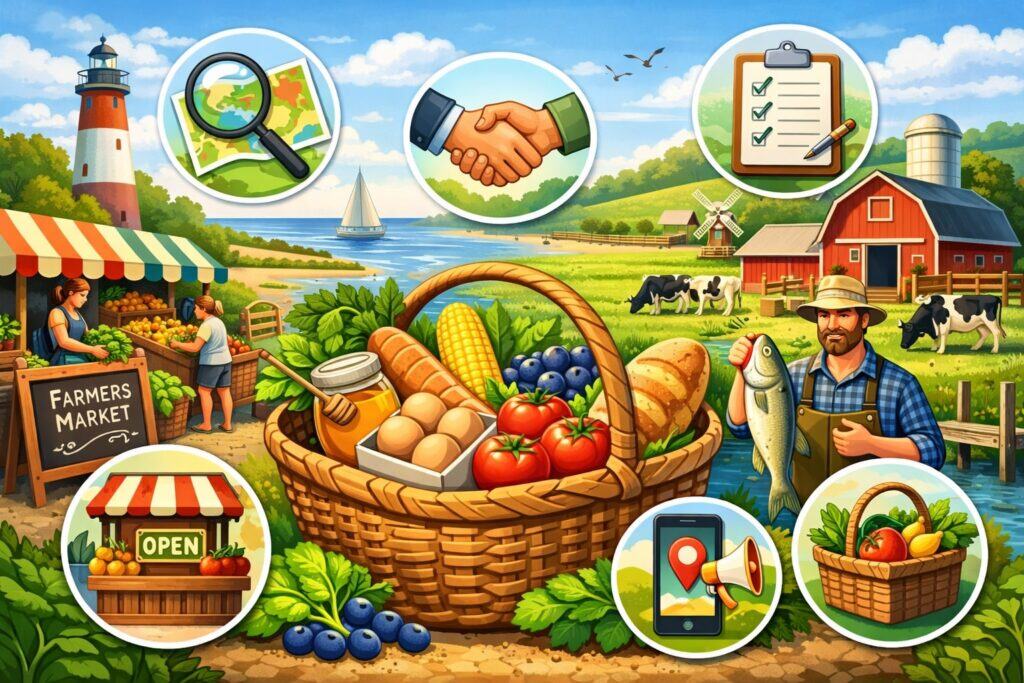
Sourcing local ingredients sounds simple until you try to do it consistently. The difference between “occasionally buying local” and building real seasonal menus is process. You need dependable relationships, clear specifications, and a plan for variability.
Start by deciding your sourcing model:
- Direct-to-farm: best for consistency and story, requires communication and flexibility.
- Farmers markets: great for discovery and small-batch buying, less consistent for volume.
- CSAs and buying clubs: good for planned volume, requires menu flexibility.
- Regional distributors with local programs: easiest operationally, sometimes less transparency.
The best approach is usually a hybrid. Use direct relationships for a few hero items (greens, tomatoes, eggs, seafood), and use a distributor for staples that keep the kitchen stable. That balance keeps seasonal menus credible without overwhelming your team.
You also need a product spec sheet, even if it’s simple: acceptable sizes, ripeness, pack style, delivery days, and substitution rules. For example, “If baby arugula is unavailable, substitute mixed tender greens” keeps seasonal menus running smoothly.
Farmers Markets and CSAs: Building Menu Flexibility the Right Way
Farmers markets and CSA-style sourcing can power incredible seasonal menus, but they demand flexibility. Market availability can shift weekly due to weather, harvest timing, and farm labor.
The mistake many kitchens make is writing rigid dishes that require exact ingredients. The better approach is to write “framework dishes.” For example:
- “Seasonal greens salad” (greens vary, dressing stays consistent)
- “Roasted vegetable bowl” (vegetables vary, sauce and grain base stay consistent)
- “Fruit crisp” (fruit varies, topping stays consistent)
This is how you keep local ingredients central without rewriting menus every day. Another smart technique is to list “rotating seasonal produce” on the menu and train staff to explain what’s in rotation. Customers actually like hearing what’s freshest this week.
If you’re a home cook, the same logic applies: buy what looks best, then cook within a category. If you planned for broccoli but found beautiful greens, pivot. Seasonal menus at home are easier when you think in patterns (stir-fry night, soup night, sheet-pan night) rather than fixed recipes.
Delaware Seafood and Coastal Supply: Keeping It Seasonal and Responsible
Delaware’s coastal access can make seafood a standout element of seasonal menus. The key is to align seafood offerings with what’s available and high-quality, rather than forcing a fixed list year-round.
Even when you don’t name specific fisheries, you can still design menu categories like “Catch of the Day” or “Seasonal shellfish feature” that update based on supply.
To keep this operationally clean, define standards:
- Minimum freshness and handling expectations
- A substitution list (if flounder isn’t available, what’s your backup?)
- Portion and yield expectations (especially for fillets and shellfish)
- Menu language guidelines (avoid overpromising)
You can also build seafood into seasonal menus through soups, spreads, and mixed dishes that tolerate variability—chowders, seafood stews, crab-style dips, and seafood pasta specials. These dishes can adapt to changing availability while keeping quality high.
For customers, transparency matters. If you’re not sure about the sourcing details, don’t invent a story. Instead, focus on what you can stand behind: freshness, local delivery, and seasonal rotation. That’s how local ingredients remain credible.
Local Meat, Dairy, and Pantry Staples: The Overlooked Backbone
Many people focus only on produce when planning seasonal menus, but proteins and pantry staples are what make seasonal cooking sustainable. Local eggs, dairy, and meats can add year-round stability to menus while supporting regional producers.
Even when produce is limited in winter, seasonal menus can still feel grounded in locality through eggs, dairy, and preserved items.
If you’re building a sourcing plan, identify a few “anchor products” you can buy consistently:
- Eggs for breakfast, baking, and sauces
- Dairy for desserts, soups, and beverages
- A limited set of proteins that fit multiple dishes
Then design recipes that reuse those anchors. This reduces supplier complexity and keeps ordering manageable. If you’re a restaurant, fewer suppliers often means fewer invoice headaches and fewer delivery windows.
For home cooks, local pantry items matter too: honey, grains, jams, pickles, and sauces from regional makers can keep seasonal menus interesting. A winter roasted root dish becomes memorable with a local honey glaze or a locally made mustard. These details help you keep the “local ingredients” promise even when fresh options are narrower.
Designing Seasonal Menus That Sell (Not Just Seasonal Menus That Sound Nice)
A beautiful concept isn’t enough. Seasonal menus must sell, cost correctly, and execute consistently. The most effective strategy is to design from constraints: what ingredients you can get reliably, what your kitchen can handle, and what your customers actually buy.
Start with a “menu matrix”:
- 2–3 high-margin items (often beverages, desserts, a signature starter)
- 2–3 crowd-pleasers (familiar flavors with seasonal twists)
- 1–2 adventurous items (for differentiation and PR buzz)
- 1–2 flexible frameworks (rotating produce bowls, seasonal soups)
This keeps seasonal menus balanced. Too many adventurous dishes can confuse customers; too many familiar dishes can make your seasonal story feel fake. The sweet spot is comfort + seasonal highlight.
Then build cross-utilization: if you’re buying basil, it should appear in a salad, a sauce, and a beverage garnish. If you’re buying apples, they should appear in a salad, a glaze, and a dessert. Cross-utilization is the secret weapon for local ingredients because it reduces spoilage and makes ordering predictable.
Pricing and Cost Control for Local Ingredients (Without Underpricing Yourself)
Local doesn’t automatically mean cheaper. Some local ingredients cost more due to smaller-scale production and higher labor costs. The goal isn’t to race to the lowest price—it’s to price for value while controlling waste. Seasonal pricing works best when you:
- Track yield (trim loss, cooking loss, portion sizes)
- Use flexible specials to test demand
- Avoid locking into fixed pricing when markets fluctuate
A smart approach is “core menu + seasonal feature pricing.” Keep core items stable, and use rotating seasonal features to reflect current costs. Customers accept seasonal variability when it’s framed as freshness and limited-time availability. This is where seasonal menus shine: limited-time dishes feel special and justify price points.
You can also protect margins by pairing expensive local items with lower-cost seasonal staples. Example: if local seafood is premium, pair it with seasonal corn, greens, or potatoes. If local berries are pricey, feature them in high-margin items like parfaits, tarts, or drinks where portion size stays controlled.
Prep Planning and Kitchen Workflow (Making Seasonal Menus Easier on Staff)
Seasonal cooking fails when it overwhelms the line. The best seasonal menus are designed to simplify execution, not complicate it. That means building reusable prep components:
- 2–3 sauces that fit multiple dishes
- Pickled items that add crunch and acidity
- Roasted vegetables that can appear hot or cold
- A seasonal soup base that changes with garnish
When prep is modular, your staff can handle seasonal rotation without constant retraining. It also reduces ticket times and improves consistency.
Another key is “prep scheduling.” High-volume seasonal items (like summer tomatoes) should be processed in batches: roast a tray, make a sauce, freeze portions. In winter, schedule braises and stocks on slower days. This supports seasonal menus while protecting labor.
For home cooks, the same concept applies: wash and chop greens once, roast vegetables in batches, and keep a jar of seasonal dressing ready. With small habits, seasonal menus become the default rather than a special project.
Preservation and Year-Round Flavor (The Bridge Between Seasons)
Preservation is how you keep seasonal menus exciting year-round without relying on out-of-season produce. Preservation doesn’t have to be complicated. Even basic techniques create major advantages:
- Freezing berries and herbs
- Quick pickles (cucumbers, onions, radishes)
- Tomato sauce, roasted tomatoes, or confit
- Ferments (when done safely)
For restaurants, preservation creates signature flavors—your “summer tomato jam” can appear on winter charcuterie boards. Your pickled vegetables can brighten rich winter dishes. This approach makes local ingredients practical even in colder months.
For home cooks, preserved seasonal items reduce grocery stress. A frozen berry stash makes winter breakfasts better. A jar of pickled onions makes almost any meal feel complete. Over time, preservation turns seasonal cooking into an ecosystem where each season supports the next.
Food Safety, Labeling, and Practical Compliance in Delaware Kitchens
Using local ingredients doesn’t reduce your responsibility—it increases it. When you source closer to home, you may work with smaller producers and varied packaging, which means your receiving and storage processes must be disciplined. Seasonal menus succeed long-term when food safety is treated as part of quality, not a separate requirement.
At minimum, your operation should have consistent procedures for:
- Receiving temperature checks (especially for seafood, dairy, meats)
- Storage labeling (date, product, use-by guidance)
- Allergen control (cross-contact prevention)
- Traceability (knowing where products came from and when)
If you’re a restaurant, “local” claims must also be honest. Don’t label something local if it’s only one component. Instead, be specific: “Featuring Delaware-grown peaches” or “Seasonal vegetables from nearby farms.” Customers appreciate clarity, and it protects your reputation.
Traceability and Supplier Communication (The Quiet Hero of Seasonal Menus)
Traceability is how you protect your business and your customers. With seasonal menus, ingredients change more often—so documentation matters.
Keep simple records: invoices, delivery notes, supplier contacts, and basic lot info when provided. If there’s ever a recall or complaint, you need to know what came in, when it came in, and where it was used.
Supplier communication is equally important. Tell suppliers how you want items packed, what condition you expect, and what substitutions are acceptable. For example, if your seasonal menus rely on tender greens, clarify acceptable size and freshness standards. If an item arrives outside spec, address it immediately and respectfully.
For home cooks, traceability is simpler but still useful: know your sources, keep seafood cold, wash produce properly, and avoid risky preservation methods. Seasonal eating should feel safer, not more uncertain.
Allergen Awareness and Menu Language (Protecting Customers and Your Brand)
Seasonal rotation increases menu complexity. A dish that was nut-free in spring might include nuts in fall. That means your allergen system must be consistent. If you run seasonal menus, update allergen documentation every time you change ingredients. Train staff to avoid guessing. If someone asks, “Is this dairy-free?” the answer must be reliable.
Menu language should also match reality. If you’re using local ingredients, don’t overclaim. Use phrases that are accurate:
- “Seasonal produce selection”
- “Local farm vegetables when available”
- “Rotating seasonal catch”
If you must reference broader guidance, agencies like the FDA provide food safety frameworks that apply broadly across states in the region, and many Delaware kitchens align their practices to those standards within local inspection expectations.
When it’s necessary to mention it, this is part of the broader regulatory environment in the United States that influences how restaurants manage safe handling.
Sustainability and Community Impact (Why Seasonal Menus Matter Beyond Taste)
Seasonal menus are one of the most practical sustainability tools available to food businesses and households. They reduce the pressure to source fragile produce across long distances, which can cut transport-related impact and reduce spoilage.
More importantly, seasonal planning encourages smarter use of what’s abundant. When you cook with abundance, you waste less.
In Delaware, buying local ingredients helps keep food dollars circulating closer to home. That supports growers, processors, and small food businesses. Over time, stronger demand can encourage more local production capacity—more varieties planted, better distribution, and more year-round options like greenhouse greens.
There’s also a cultural benefit. Seasonal menus teach customers what “normal” food seasons look like again. Instead of expecting everything at all times, people start to anticipate summer tomatoes and fall apples. This anticipation creates excitement and loyalty. Customers come back because they don’t want to miss the seasonal special.
Reducing Food Waste Through Seasonal Planning
Waste reduction is where seasonal menus can quietly outperform static menus. Static menus often force you to buy specific items even when quality is poor or costs spike. Seasonal planning lets you buy what’s best and use it fully. If berries are plentiful, run them in desserts and drinks. If winter squash is abundant, use it in soup, roasted sides, and fillings.
A powerful waste strategy is “whole-ingredient thinking.” Use beet greens as sautéed greens. Use herb stems in stocks. Use citrus peels for syrups. This turns trim into value and supports consistent margins.
For home cooks, plan meals that share ingredients. If you buy a big bunch of greens, use them across three meals: salad, sauté, soup. That’s how seasonal menus become a budget-friendly lifestyle, not an expensive ideal.
Supporting Delaware Producers Without Overcomplicating Purchasing
You don’t have to source everything locally to make a real impact. Even a few consistent purchases—like eggs, greens, and a rotating seasonal fruit—can meaningfully support local ingredients supply chains. The key is consistency: producers can plan better when they have steady customers.
For restaurants, consider a “featured partner” rotation rather than trying to list every supplier. For home cooks, commit to a few local habits: buy seasonal fruit locally, choose local eggs, and pick one local pantry product (honey, jam, sauce). These small choices reinforce the system that makes seasonal menus possible.
Future Predictions: Where Seasonal Menus and Local Ingredients Are Headed
The future of seasonal menus in Delaware will likely be shaped by two forces at the same time: climate variability and technology.
Growing seasons may become less predictable year to year—more extreme weather events, shifting harvest timing, and new pest pressures. That means seasonal planning will rely more on flexibility and stronger supplier networks rather than fixed calendars.
At the same time, technology is making local sourcing easier. More producers and small suppliers are adopting online ordering, delivery routing, and inventory visibility. For restaurants, this could mean faster menu updates and better forecasting. For consumers, it can mean easier access to local ingredients without needing to visit multiple locations.
Another trend is “hyper-seasonal micro-menus.” Instead of changing menus quarterly, some businesses will shift weekly, using social media and digital menu boards. This works well for seasonal menus because it turns variability into a selling point—“this week’s harvest plate.”
We’ll also likely see growth in controlled-environment agriculture—greenhouses and indoor growing—helping extend access to greens and herbs through winter. That doesn’t replace traditional farming, but it can support seasonal menus with better winter variety while still staying local.
Finally, customer expectations are evolving. People want proof: where ingredients come from, how they’re grown, and how businesses treat sustainability claims. The winners will be those who keep local ingredients messaging honest, specific, and tied to real practices.
FAQs
Q.1: What’s the easiest way to start seasonal menus if I’m a beginner?
Answer: Start small and repeatable. Pick 5–10 ingredients that are clearly seasonal right now and build seasonal menus around flexible dish frameworks: salads, bowls, soups, and roasted vegetable plates. Instead of creating brand-new recipes constantly, swap the seasonal component.
For example, a “seasonal salad” can keep the same dressing and toppings while rotating greens, fruit, and crunch based on availability. This approach makes seasonal menus easier to maintain and reduces the stress of constant innovation.
If you’re sourcing local ingredients, choose one reliable source first (a market vendor, CSA, or local supplier) before expanding. Consistency beats variety early on because it helps you learn what’s available and when.
Q.2: Are local ingredients always better than non-local ingredients?
Answer: Not always, but they often offer advantages that matter for seasonal menus: freshness, flavor, and transparency. However, quality depends on handling, storage, and harvest timing. A well-handled non-local ingredient can outperform a poorly handled local one.
The best approach is “best available quality, prioritized locally when it makes sense.” In practice, that means using local ingredients when they’re at peak and choosing reputable sources for items that aren’t practical locally. Seasonal menus should be about excellence and honesty, not rigid rules.
Q.3: How do restaurants keep seasonal menus consistent if supply changes?
Answer: They design for flexibility. The most reliable seasonal menus rely on category-based dishes and defined substitutions. A menu might say “seasonal vegetables” rather than “zucchini and eggplant,” and the kitchen keeps a substitution list approved for flavor and cost.
Restaurants also use preservation to stabilize flavor: frozen berries, tomato sauces, pickles, and stocks allow local ingredients from peak seasons to appear later in controlled ways. Consistency isn’t about using the exact same product every day—it’s about delivering a consistent guest experience.
Q.4: How can I make seasonal menus work in winter in Delaware?
Answer: Winter seasonal menus work best when you embrace roots, storage crops, soups, braises, and preserved ingredients. Use roasted carrots, beets, potatoes, cabbage-family vegetables, and stored squash as foundations.
Add brightness with pickles, vinegar-based sauces, and herb oils when available. If you preserve summer tomatoes or frozen berries, winter becomes much easier and more exciting. Also, rely on local anchors like eggs and dairy to keep local ingredients meaningful when fresh produce options narrow.
Q.5: What keywords and phrases help seasonal menus rank in search results?
Answer: If you’re publishing content or marketing seasonal menus, include natural phrases that match what people search: “seasonal menus,” “local ingredients,” “Delaware seasonal produce,” “farm-to-table Delaware,” “seasonal recipe ideas,” “what’s in season in Delaware,” and “local sourcing for restaurants.”
Use these terms in headings and throughout the article in a readable way. The key is to prioritize clarity: explain how to plan seasonal menus, where to find local ingredients, and what customers gain. Search engines reward helpful structure and specificity, especially when your content answers real questions.
Conclusion
Seasonal menus are the practical intersection of flavor, profitability, and community in Delaware. They help you cook with ingredients at their best, reduce waste through smarter planning, and create a dining experience that feels fresh and relevant all year.
When you prioritize local ingredients, you also strengthen the regional food ecosystem—supporting growers, producers, and suppliers who make seasonal cooking possible.
The secret to success isn’t perfection. Its systems: flexible menu frameworks, clear sourcing relationships, cross-utilized prep, and preservation that bridges seasons. With those pieces in place, seasonal menus stop being a marketing idea and become a reliable operating model.
Looking ahead, the best seasonal planners will adapt faster than everyone else. Climate variability may make harvest timing less predictable, but technology and stronger supplier networks will make local ingredients easier to access and track.