Top 10 Must-Visit Historic Restaurants in Delaware
Delaware may be small on the map, but it’s big on stories you can taste. From colonial river towns to coastal ports that once fueled Atlantic trade, the First State built its food culture around movement—ships docking in New Castle, travelers passing through Odessa, legislators gathering in Dover, and beachgoers packing the boardwalk towns each summer.
That mix of colonial roots, coastal commerce, and walkable historic districts (New Castle, Wilmington, Dover, Lewes, and beyond) is why historic restaurants in Delaware feel less like themed attractions and more like living rooms that never stopped hosting.
You’ll find 17th-century beams overhead, early-American brickwork under your feet, and menus that balance old-school comfort with modern Delaware ingredients.
So what makes a restaurant “historic”? It’s usually a blend of:
- Age and continuity (years in operation, or a long hospitality tradition tied to the site)
- Preserved architecture (original masonry, fireplaces, dining rooms, façades, or period details)
- Cultural impact (community gathering place, political or social significance, local legend)
- Family legacy (multi-generation stewardship or locally rooted ownership)
- Authentic atmosphere (not perfect—just real)
Below are ten must-visit historic restaurants in Delaware, chosen for the way they connect food lovers to Delaware’s past—without sacrificing a great meal today.
How We Chose These Historic Restaurants
When you search for the best historic restaurants in Delaware, you’ll notice the word “historic” can mean different things. Some places are historic because the building is centuries old. Others are historic because the restaurant itself has served generations, even if the space has been refreshed over time.
To keep this list useful (and people-first), the selections prioritize restaurants that deliver both credible history and a memorable dining experience right now.
Criteria for selection
- Longevity: Years in operation, or a well-documented hospitality history tied to the site
- Historic building significance: Landmark structures, preserved architectural features, or documented historic contexts
- Cultural/community importance: Places that shaped local social life, travel routes, or civic identity
- Authentic atmosphere: You can feel the setting—not just read about it on a plaque
- Reputation for food quality: A strong, consistent track record as a place people actually return to
You’ll see a range of eras here—colonial-era restaurants in Delaware, 19th-century inns and taverns, and mid-century icons that locals treat as heritage.
Top 10 Must-Visit Historic Restaurants in Delaware
1) Jessop’s Tavern & Colonial Restaurant (Historic New Castle)

Location: 114 Delaware St, New Castle, DE 19720, United States
Historic setting: A building dating back to 1674 in Old New Castle
Why it’s historic: Few dining rooms in America can honestly claim “nearly 350 years of walls.” The structure at 114 Delaware Street has deep roots in the town’s colonial story, including an early connection to copper (barrel-making) work tied to Abraham Jessop in the 1700s.
Step inside and the atmosphere does the heavy lifting. This is one of the landmark restaurants Delaware travelers talk about because the setting feels intact: old beams, period-leaning décor, and the sense that a conversation here could easily slide into “what was this street like 200 years ago?”
Signature dishes & what to order
- Hearty tavern fare (think comfort-forward plates built for a cold night)
- Pair your meal with a Belgian beer list that’s part of the restaurant’s identity (a fun twist on “colonial” dining)
Why it’s worth visiting today
- It’s the rare historic spot that still feels lively—less museum, more gathering place
- You can build a whole day around it in Old New Castle’s walkable historic district
Practical visiting tips
- Best time to go: Early dinner on a weekday for the most relaxed experience
- Nearby attractions: Stroll the cobblestone streets and historic green areas around the district
- Insider tip: Plan a slow walk afterward—Old New Castle is a “digestive stroll” town, and the scenery is part of the meal
Highlights
- 17th-century structure and one of the most convincing “step back in time” dining rooms in the state
- A top contender whenever people debate the oldest restaurants in Delaware (at least by building)
Why Jessop’s belongs on any “historic restaurants in Delaware” list
If your goal is to experience Delaware’s early story through architecture, Jessop’s is the easiest “yes.” The building’s documented age (1674) anchors the experience immediately, and the surrounding neighborhood reinforces it—this is not a lone historic façade on a busy highway, but part of a preserved colonial streetscape.
To make the most of it, treat your visit like a mini time-travel itinerary. Arrive before peak hours, ask for a seat where you can see the older structural details, and linger long enough to absorb the mood.
Old New Castle rewards patience: the river air, the quiet blocks, and the historic homes create a context you can’t replicate in a newer dining district. Jessop’s feels like a chapter inside that larger story—one you can literally taste.
2) Cantwell’s Tavern (Odessa)
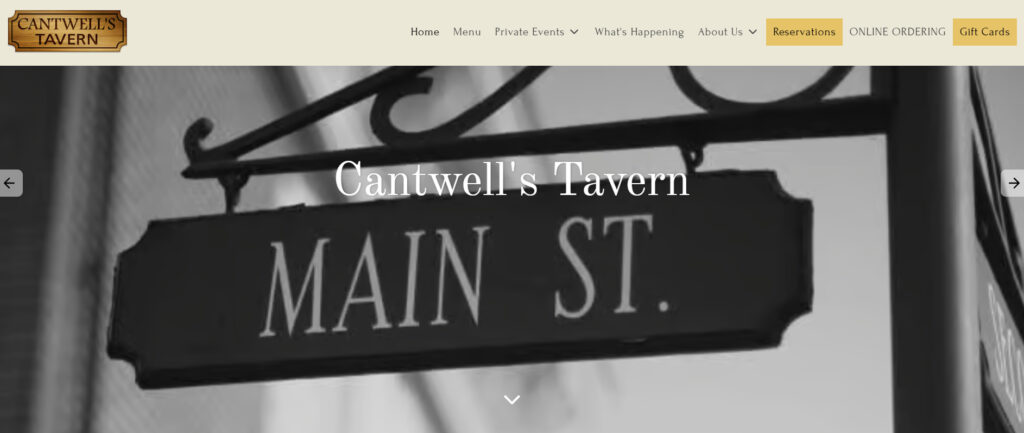
Location: 109 Main St, Odessa, DE 19730, United States
Year / era: The tavern building dates to 1822
Historic setting: Originally the Cantwell’s Bridge Hotel and Tavern, built when Odessa was a busy port town
Odessa is one of Delaware’s most charming historic towns, and Cantwell’s is one of its anchors. The Historic Odessa Foundation describes the building as a refined, Federal-style property that served travelers and merchants for decades—exactly the kind of stop you’d expect in a river-linked community.
Architectural and interior details
- Federal-era lines and proportions (clean, balanced, early-American elegance)
- A sense of “inn culture”—the building reads like a place meant to host people passing through
Signature dishes & what to order
- Upscale American classics in a setting that still feels like an old inn
- If you love historic taverns, aim for a meal that fits the room: a hearty entrée, seasonal vegetables, and a classic cocktail
Why it’s worth visiting today
- It’s one of the most convincing Delaware heritage restaurants experiences because the town around it is also preserved
- Your visit supports a broader preservation ecosystem tied to the Historic Odessa Foundation
Practical visiting tips
- Best time to go: Dinner after a daylight walk through Odessa’s historic streets
- Nearby attractions: Historic Odessa sites and preserved streetscapes
- Insider tip: If you’re building a multi-stop tour, Odessa is a great midpoint between New Castle County and the Dover area
Highlights
- Built in 1822 and operated as a hotel/tavern for roughly a century
- One of the most atmospheric “small-town inn” dining rooms in the state
What makes Cantwell’s one of the best historic restaurants in Delaware
Cantwell’s succeeds because it doesn’t force the past. The building itself provides the mood: the town’s scale, the historic context as a former port community, and the structure’s proportions all create a sense of place before you even open the menu.
For travelers, the real win is how easy it is to pair Cantwell’s with a broader heritage day. Odessa’s historic footprint is compact, so you can walk off lunch with a short architectural loop, pop into preservation sites, then return for dinner without driving all over the state.
If your “people-first” goal is an experience—food plus story plus setting—Cantwell’s delivers a complete package.
3) Le Cavalier at The Green Room (Hotel du Pont, Wilmington)
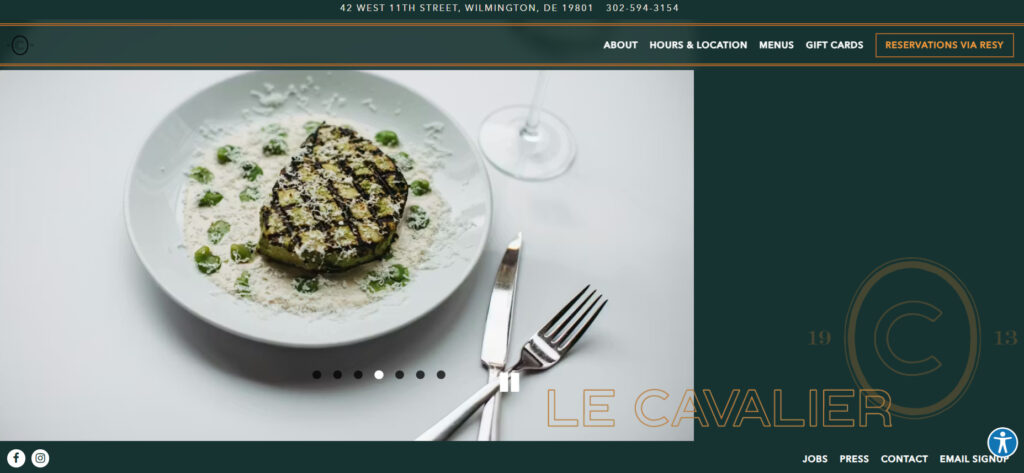
Location: 42 W 11th St, Wilmington, DE 19801, United States
Year / era: The original Green Room opened with Hotel du Pont in 1913
Historic setting: An Italian Renaissance–style landmark hotel with a famed dining room that became a power-lunch and celebration destination for generations
If you want “Gilded Age Delaware,” this is the reservation. The National Trust notes the Hotel du Pont’s cultural weight and the Green Room’s long role as Wilmington’s see-and-be-seen dining stage—then details how the space evolved into Le Cavalier while respecting the room’s legacy.
Architectural and interior details
- A grand historic dining room designed for ceremony—think: old-world luxury rather than rustic tavern charm
- A setting that still reads as “special occasion,” even when the menu feels modern
Signature dishes & what to order
- French-leaning plates and classic technique (the kind of menu that fits an opulent room)
- A celebratory meal here often starts with a proper cocktail and ends with dessert—lean into the ritual
Why it’s worth visiting today
- It’s a direct line into Wilmington’s early-20th-century confidence
- The refreshed concept preserves the “historic room” feeling while giving modern diners a reason to return
Practical visiting tips
- Reservations: Strongly recommended for prime times
- Best time to go: Weeknights for a slightly calmer, more “soak it in” vibe
- Nearby attractions: Downtown Wilmington walks, theaters, and historic institutions
Highlights
- A rare historic dining room where architecture is part of the meal
- A cornerstone among famous historic dining spots in Delaware (especially for fine dining)
How to enjoy Le Cavalier like a regular
This is one of those vintage restaurants Delaware visitors sometimes overthink—“Do I need a milestone to go?” Not really. The best approach is to pick a normal reason (a friend in town, a Friday night, an anniversary that doesn’t need a big speech) and let the room elevate it.
Arrive a bit early, dress one step above casual, and take a moment to look up—literally. The details that make the Green Room historically significant are in the scale and craftsmanship, and you’ll enjoy the food more when you’re present for the atmosphere.
Pair your visit with a short Wilmington stroll and you’ll understand why this room held so much social gravity for so long.
4) The Quoin Restaurant & Rooftop (Wilmington)
Location: The Quoin Restaurant, Left Side, 519 N Market St, Wilmington, DE 19801, United States
Historic building: A brownstone dating back to 1885
Historic setting: A reimagined former bank/safe deposit-era structure with architectural cues tied to its “cornerstone” concept
Not every historic restaurant has to be colonial. The Quoin is a smart pick for diners who love historic architecture but also want a contemporary energy. The building’s 1885 roots and Romanesque/Victorian feel give you that “old Wilmington” backdrop, while the hospitality concept is thoroughly modern.
Architectural and interior details
- A historic brownstone “vault-to-hotel” narrative and preserved features like fireplaces and heritage design elements noted in local coverage
- Outdoor patio views tied to nearby gardens and cultural institutions
Signature dishes & what to order
- Expect seasonal, chef-driven plates that fit a “special but not stiff” night out
- Rooftop drinks are a strong move if you want the city’s historic blocks as your backdrop
Why it’s worth visiting today
- It’s a living example of adaptive reuse—historic bones, new life
- Great for travelers who want one stop that blends architecture, cocktails, and a full meal
Practical visiting tips
- Best time to go: Sunset drinks, then dinner
- Nearby attractions: Delaware historical institutions and downtown Wilmington strolls
- Insider tip: Book ahead for rooftop-heavy weekends
Highlights
- A standout among must-visit historic restaurants in Delaware for design lovers
- Proof that “historic” can mean preserved structure + fresh concept
The Quoin’s sweet spot for travelers
If you’re building a one- or two-day Wilmington itinerary, The Quoin is the easiest “two birds” pick. You get a historic structure (the 1885 brownstone story matters here) plus a dining program that feels current enough to satisfy picky food travelers.
The trick is pacing: start with a walk through downtown first so the building’s details land harder, then come back for drinks and dinner.
If you’re traveling with someone who’s less “history nerd” and more “cocktail and vibe,” The Quoin keeps everyone happy—while still earning its place among Delaware’s heritage-forward dining stops.
5) Deer Park Tavern (Newark)
Location: 108 W Main St, Newark, DE 19711, United States
Historic era: Roots tied to a hotel structure built in 1851
Historic setting: A long-running Main Street institution tied to Newark’s travel-and-railroad era story
Deer Park Tavern is historic in the way college towns do “heritage”: the building is documented as a mid-19th-century hotel site with Greek Revival elements, later evolving into a modern tavern scene that still nods to its past.
Architectural and interior details
- A landmark structure with a long Newark hospitality lineage
- A classic Main Street presence that feels stitched into the town’s identity
Signature dishes & what to order
- Pub classics and crowd-friendly plates
- This is a great stop for a casual “historic taverns in Delaware” crawl rather than a formal dinner
Why it’s worth visiting today
- It’s a living example of how historic buildings keep evolving with the community around them
- Perfect for pairing with campus walks, local bookstores, and Newark’s small downtown
Practical visiting tips
- Best time to go: Earlier in the evening if you want a calmer feel
- Nearby attractions: University of Delaware campus strolls, Main Street window-shopping
- Insider tip: Go when you can appreciate the building—late-night crowds can make it feel more “party” than “history”
Highlights
- Historic roots explicitly celebrated by the tavern itself
- A strong pick for travelers who want heritage + energy in one place
Deer Park as a “history-meets-campus” stop
Deer Park Tavern is a reminder that historic preservation isn’t always quiet. In a college town, historic buildings survive by staying useful, and Deer Park’s modern role is exactly that: a community hub that still carries its 19th-century hospitality DNA.
To get the most out of it, treat it like a two-part visit. First, notice the building’s place on Main Street and how it fits the older downtown fabric. Then step inside and observe how the space functions today.
That contrast—old structure, current social life—is the point, and it’s why Deer Park belongs in a list of famous historic dining spots in Delaware even when the menu leans casual.
6) The Charcoal Pit (Wilmington)
Location: 2600 Concord Pike, Wilmington, DE 19803, United States
Year established: 1956
Historic vibe: Mid-century Delaware—retro, local, and proudly unchanged in spirit
When people debate the “oldest” or most iconic non-colonial eateries, The Charcoal Pit comes up fast. It’s been serving burgers and shakes since 1956, and its whole identity is tied to that mid-century American diner mood—an era that now qualifies as history in its own right.
Architectural and interior details
- Retro diner energy and a sense of local continuity
- A “landmark casual eatery” story tied to longtime ownership and Wilmington tradition
Signature dishes & what to order
- Flame-broiled burgers and classic milkshakes (this is the point)
- If you’re a nostalgia eater, order like it’s 1965: burger, fries, shake
Why it’s worth visiting today
- It’s one of Delaware’s most approachable heritage stops—no dress code, no intimidation
- Great for families and travelers who want a quick “local legend” meal
Practical visiting tips
- Best time to go: Late lunch or early dinner to avoid peak crowds
- Nearby attractions: Wilmington neighborhoods and quick drives to parks/museums
- Insider tip: This is a perfect “tour reset” stop between heavier historic meals
Highlights
- One of the best “mid-century historic” options among historic restaurants in Delaware
- A must for burger-and-shake fans doing a First State food tour
Why The Charcoal Pit counts as a heritage restaurant
Not all heritage is colonial. The Charcoal Pit preserves a specific Delaware-era feeling: postwar car culture, teen hangouts, and the kind of neighborhood spot that becomes a community memory bank.
Its longevity (since 1956) is well documented, and the menu’s confidence is part of what makes it historic—this place doesn’t need to reinvent itself to stay relevant.
For travelers, the value is simplicity. After a day of walking historic districts, you can sit down here and enjoy an easy, satisfying meal that locals genuinely treat as a tradition. If you’re building a list of the best historic restaurants in Delaware, it’s smart to include at least one stop that represents modern Delaware history—not just the 1700s.
7) Golden Fleece Tavern (Dover)
Location: 1 The Green, Dover, DE 19901, United States
Historic context: The original Golden Fleece Tavern site dates to the 1730s and played a major role in Delaware’s revolutionary-era civic life
Today’s experience: A modern “reincarnated” tavern concept that borrows the name and story of one of Dover’s most important historic gathering spots
This one needs honest framing. The Golden Fleece is historically famous because the site mattered—colonial Dover used taverns as information hubs, meeting halls, and political venues.
Delaware’s own historical marker materials describe the Golden Fleece as a key place for wartime communications and government meetings after the state capital moved to Dover.
Modern Dover also has a venue operating under the Golden Fleece name, positioned as a revival of that story in today’s downtown. That makes it a useful stop for travelers who want to “eat the history” while staying grounded in what’s original vs. inspired.
Signature dishes & what to order
- Classic tavern-friendly food and drinks (go for comfort and conviviality rather than fine dining)
- Order something shareable if you’re turning it into a group history night
Why it’s worth visiting today
- It’s one of the easiest ways to connect Dover’s historic narrative to a modern night out
- Great for pairing with a walk around Legislative Mall and downtown sites
Practical visiting tips
- Best time to go: Before or after visiting downtown Dover landmarks
- Nearby attractions: Dover’s historic core and government-area sights
- Insider tip: Read the historic marker story first—then the room feels richer
Highlights
- Strong historical story, even if the modern venue is best understood as a revival concept
- A smart “history bridge” stop in Central Delaware
How to do the Golden Fleece the right way
If you love colonial-era restaurants in Delaware, you might be tempted to treat the Golden Fleece as “unchanged since the 1700s.”
Don’t. The more satisfying approach is to treat it as a two-part experience: (1) learn the story of the original tavern’s civic importance, then (2) enjoy the modern downtown revival as a place that keeps the tradition of gathering alive.
That honesty actually improves the visit. You’re no longer chasing an impossible “perfect preservation” fantasy. Instead, you’re appreciating how Dover’s history still shapes where people meet, talk, and celebrate today—exactly what taverns were built to do.
8) Rose & Crown (Lewes)
Location: 142 2nd St #2a, Lewes, DE 19958, United States
Historic building context: Hotel Rodney was built in 1926
Restaurant era: Rose & Crown has operated in Lewes since 1984 (as widely documented in local food coverage)
Lewes is often described as Delaware’s oldest town, and even if you don’t chase that claim, the streets absolutely feel early-American and maritime. Rose & Crown fits the setting with a British gastropub identity—comfortable, familiar food that works especially well after a day of coastal walking.
Architectural and interior details
- The larger Hotel Rodney building story (1926, restored later) contributes to the “historic town” mood
- You’re dining in the texture of downtown Lewes, where the buildings and blocks are part of the experience
Signature dishes & what to order
- Pub-style favorites and seafood-friendly specials (Lewes naturally pulls you toward the sea)
- If you want a Delaware-leaning order, prioritize crab or Old Bay touches when available
Why it’s worth visiting today
- One of the easiest “historic-town dinner” picks in Southern Delaware
- A reliable stop when you’re building a Lewes weekend around history + beach time
Practical visiting tips
- Best time to go: Early evening before Lewes gets busy
- Nearby attractions: Downtown Lewes walks, bay views, shops, and historic corners
- Insider tip: If you’re staying nearby, walk—Lewes is best experienced at strolling pace
Highlights
- A long-running coastal-town staple with a clearly documented local presence
- Great for travelers seeking waterfront historic restaurants Delaware energy nearby (even when not directly on the water)
A simple way to make Rose & Crown feel “historic”
Rose & Crown shines when you treat it as part of a Lewes heritage day rather than a standalone “destination restaurant.”
Start with the town’s older blocks, pop into local museums or historic corners, then come here for a warm, familiar meal that feels right in a traditional seaside town. The Hotel Rodney building context (built in 1926) reinforces that you’re eating inside a place that has hosted travelers for nearly a century.
If you’re traveling with mixed interests—one person wants history, another wants comfort food, another wants a casual pub vibe—this is an easy compromise. It’s also a practical stop on a multi-restaurant tour because it won’t overwhelm your schedule or your appetite.
9) Vanderwende Farm Creamery (Bridgeville)
Location: 4003 Seashore Hwy, Bridgeville, DE 19933
Historic/family legacy: The farm’s story traces back to 1954, starting small and growing across generations
Why it qualifies: Not every historic restaurant is a tavern. Delaware’s food heritage includes agriculture, dairy, and the roadside stops that define summer travel.
Vanderwende earns its place as a heritage food stop because it’s rooted in Delaware’s working-land reality. The family farm origin is documented (purchased in 1954), and the creamery identity connects directly to place—this isn’t “farm-themed,” it’s farm-based.
Architectural and interior details
- A modern creamery setting, but the “historic” feeling comes from the land, the route, and the multi-generation continuity
- A quintessential Delaware travel stop on the way to coastal towns
Signature dishes & what to order
- Small-batch ice cream and seasonal flavors
- If you’re doing a tour, this is your perfect “sweet reset” between heavier meals
Why it’s worth visiting today
- It connects Delaware’s agricultural story to the way people actually travel through the state
- Great for families, road-trippers, and anyone who wants “local tradition” without a formal meal
Practical visiting tips
- Best time to go: Spring and summer afternoons (but expect lines)
- Nearby attractions: Coastal route stops and beach-town drives
- Insider tip: If you’re beach-bound, stop on the way rather than after sunset traffic
Highlights
- Multi-generation Delaware farm legacy with a clear origin story (1954)
- A delicious way to experience “heritage” outside the colonial/tavern lane
Why a farm creamery belongs with historic taverns
When people picture historic restaurants in Delaware, they often imagine brick taverns and candlelit dining rooms. But Delaware’s heritage is also agricultural, and the state’s modern traditions—especially beach travel—are shaped by roadside landmarks that generations repeat every summer.
Vanderwende represents that living tradition: a family story, a specific route (404), and a ritual stop that locals and visitors share.
If you’re building a “historic dining tour,” you need at least one stop that shows how Delaware eats today because of how Delaware has always lived: farming, traveling, and gathering around seasonal routines.
10) Kelly’s Tavern (Port Penn)
Location: Port Penn (Delaware River area)
Historic vibe: A small, working-waterfront community setting; a local tavern identity tied to the village’s maritime character
Why it fits: Port Penn isn’t a polished resort town—it’s a place where the river still feels like a livelihood. A tavern that thrives here tells you something about Delaware’s working coastal history.
Kelly’s Tavern is less about formal architecture and more about place-based authenticity. You’re eating in a community whose story is tied to the river, seafood, and the rhythms of waterfront life—exactly the kind of “real Delaware” experience that heritage travelers hunt for.
Signature dishes & what to order
- Seafood-forward plates; prioritize crab when available
- If you’re chasing Delaware flavor, this is where you lean into simple, well-loved coastal fare
Why it’s worth visiting today
- A strong pick for travelers seeking waterfront historic restaurants Delaware energy without resort-town gloss
- It feels like a local place first—and that’s a big part of the appeal
Practical visiting tips
- Best time to go: Earlier in the day if you want a quieter, more “village” feel
- Nearby attractions: River views and driving routes through small Delaware communities
- Insider tip: Bring cash just in case (small taverns vary), and keep expectations casual
Highlights
- A true “tucked-away Delaware” stop with an unmistakably local personality
- Great for building a tavern-and-seafood themed day
How to make a Port Penn stop feel like a heritage experience
Kelly’s works best when you treat it as a detour that teaches you something. Big historic districts can feel curated; small river villages feel lived-in. Plan a slow drive, arrive hungry, and consider your meal part of a larger “Delaware River day.”
The closer you get to the water, the more the state’s maritime story makes sense—why seafood matters, why taverns matter, and why these small communities shaped Delaware’s daily life just as much as the grander colonial squares.
For history-minded travelers, this is the kind of stop that rounds out your understanding of Delaware beyond the postcard towns.
Regional Breakdown: Where to Go First
Delaware’s historic dining map is easiest to navigate in three zones. Each region has a distinct “food-and-history personality,” so you can plan around what you want to feel.
Northern Delaware: Wilmington & New Castle
This is where Delaware’s colonial streetscapes and Gilded Age ambition sit close together. In one day you can go from a 17th-century building in New Castle to a grand early-20th-century dining room in Wilmington.
Jessop’s anchors the colonial side, while Hotel du Pont’s dining legacy represents Wilmington’s era of polished urban confidence.
Best for: architecture lovers, history enthusiasts, and travelers who want walkable itineraries.
Ideal pairing: New Castle historic district stroll → Wilmington dinner.
Central Delaware: Dover & the capital corridor
Dover’s historic draw is civic: tavern stories, legislative history, and the idea that public life once happened over meals and drinks. The Golden Fleece story is a prime example—taverns as meeting halls and information exchanges in a young state.
Best for: American history fans, weekend trippers, and anyone building a “heritage-and-government” day.
Ideal pairing: downtown Dover landmarks → a tavern-style evening.
Southern Delaware: Lewes, Bridgeville, and the coastal route
Downstate historic dining is about travel rhythms—beach weekends, farm routes, and seaside town traditions. Lewes gives you historic-town charm, while stops like Vanderwende show how agricultural heritage and road trips define modern Delaware food culture.
Best for: families, food travelers headed to the coast, and anyone who wants history plus vacation energy.
Ideal pairing: Lewes walk + pub dinner → farm creamery stop on the drive.
Signature Delaware Dishes to Try at Historic Restaurants
If you’re touring historic restaurants in Delaware, it helps to order like a local. These aren’t “one perfect recipe” dishes—they’re categories of Delaware flavor that show up across the state.
Scrapple
A Mid-Atlantic breakfast classic that’s especially satisfying in historic settings because it feels tied to older frugal cooking traditions. If you see it on a breakfast or brunch menu, order it crispy and pair it with eggs.
Blue crab dishes
Crab is one of Delaware’s most recognizable food identities. Look for:
- Crab cakes (often with minimal filler)
- Crab soups or chowders
- Old Bay–seasoned specials
For coastal or river-adjacent taverns, crab is usually the “trust the place” order.
Boardwalk-inspired fare
Delaware beach towns brought a style of casual indulgence—seafood baskets, fries, and easy “vacation plates.” Even if you’re inland, you’ll see boardwalk influence in the way Delaware does comfort food.
Colonial-style meals
You won’t find strict 1700s menus in most places, but you will find dishes that feel tavern-true: roasts, stews, hearty sides, and plates meant to fuel long conversations—especially in New Castle and Odessa-style settings.
Tips for Planning a Historic Dining Tour in Delaware
A “historic restaurant road trip” is one of the easiest ways to see Delaware well—because the state is drivable, and the towns reward slow pacing.
Best seasons to visit
- Spring and fall: Ideal walking weather for historic districts and less beach traffic
- Summer: Best for coastal energy, but plan around crowds and parking
Weekend vs. weekday dining
- Weekdays give you more breathing room in small historic dining rooms
- Weekends feel lively, but reservations matter more (especially Wilmington and Lewes)
Pairing with historic sites
- Pair New Castle dining with Old New Castle streets and river views
- Pair Wilmington dining with downtown architecture and cultural institutions
- Pair Dover dining with downtown markers and government-area sightseeing
Making reservations
- For formal historic rooms (Hotel du Pont) and popular weekend towns, reserve ahead
- For taverns and casual legacy spots, arriving early is often your best “reservation strategy”
Insider planning tip
- Build your day like this: walk first → eat second. Historic towns are more meaningful when you’ve already seen the streets that shaped the restaurant’s story.
Common Myths About Historic Restaurants
Myth 1: “Historic means outdated”
Historic often means preserved, not old-fashioned. Many heritage restaurants modernize kitchens, refresh menus, and update service while keeping the bones and atmosphere that make the place special.
Myth 2: “Old restaurants don’t offer modern cuisine”
Adaptive reuse spots (like historic buildings reimagined for new dining concepts) are proof that history and modern food can coexist. You can have a contemporary plate in an 1880s brownstone and still feel the building’s story.
Myth 3: “Historic restaurants are always expensive”
Some are—especially grand dining rooms. But Delaware’s heritage dining spectrum includes casual icons like The Charcoal Pit and roadside heritage stops like a farm creamery.
FAQs
Q1) What is the oldest restaurant in Delaware?
Answer: If you’re measuring by the age of the building, Jessop’s Tavern operates in a structure dating to 1674, making it one of the strongest “oldest” contenders by setting.
Q2) Are historic restaurants in Delaware expensive?
Answer: It depends. Fine-dining historic rooms in Wilmington can be a higher spend, while casual legacy spots (like a classic burger-and-shake institution) are much more budget-friendly.
Q3) Do these restaurants still operate in their original buildings?
Answer: Several do, especially where the building itself is part of the story (Jessop’s, Cantwell’s, and the Hotel du Pont dining room). Others are historic through long local legacy rather than a single “unchanged” structure.
Q4) Which Delaware towns have the most historic dining spots?
Answer: Historic New Castle and Wilmington are dense with heritage architecture and long-running dining stories. Dover and Lewes also offer strong “historic-town” dining days.
Q5) Are reservations required at the best historic restaurants in Delaware?
Answer: For special-occasion rooms and popular weekends, yes—reservations are strongly recommended. For taverns and casual spots, arriving early often works.
Q6) Are historic taverns in Delaware family-friendly?
Answer: Many are, especially during lunch and early dinner. Later hours can skew more adults, particularly in college-town taverns.
Q7) What should I wear to a historic restaurant in Wilmington?
Answer: For grand historic dining rooms, lean business-casual or slightly dressy. For taverns and diners, casual is fine.
Q8) Can I build a day trip around historic restaurants in Delaware?
Answer: Absolutely. Delaware’s size makes it ideal for a loop: New Castle → Wilmington or Dover → Lewes, depending on your base.
Q9) What’s the best season for a historic dining tour?
Answer: Spring and fall give you the best walking weather for historic districts, plus fewer crowds than summer beach season.
Q10) Are there waterfront historic restaurants in Delaware?
Answer: Yes—especially in river and coastal communities where seafood taverns reflect Delaware’s maritime heritage.
Q11) Which spot is best for architecture lovers?
Answer: Jessop’s for colonial-era structure, Hotel du Pont’s dining room for early-20th-century grandeur, and The Quoin for historic-building adaptive reuse.
Q12) What if I only have one meal in Delaware?
Answer: If you want maximum “historic” impact in one sitting, Jessop’s gives the most immediate colonial setting. If you want classic elegance, choose Hotel du Pont’s dining legacy.
Q13) Do historic restaurants in Delaware accommodate modern dietary needs?
Answer: Many do (vegetarian options, gluten-aware dishes, flexible substitutions), but it varies by venue. Call ahead if you have strict requirements.
Q14) What’s a good “kid-friendly historic” stop?
Answer: A classic diner/burger institution is often easiest for families, and a farm creamery is a guaranteed win for dessert-focused kids.
Q15) How do I avoid tourist traps?
Answer: Look for places with a strong local routine: weekday regulars, consistent community relevance, and a story rooted in the town—not just a “historic” label.
Conclusion
The best historic restaurants in Delaware don’t just serve meals—they serve context. A colonial building in New Castle makes dinner feel like a chapter in early America. A grand Wilmington dining room reminds you how cities celebrated in the 1910s.
A mid-century burger counter captures the Delaware of car culture and high school hangouts. A family farm creamery tells the quieter story of land, seasons, and the road to the beach.
If you want the most satisfying trip, don’t chase “old” for the sake of old. Chase places where history is still doing work—in the architecture, the rituals, the neighborhood, and the way locals keep returning.
That’s how you’ll find the best historic restaurants in Delaware and turn a simple meal into the kind of experience you’ll talk about long after you’ve crossed the state line again.