
How to Spot a Restaurants Signature Dish
A restaurants signature dish is the one plate that captures the chef’s personality, the restaurants story, and the local flavors on a single plate.
It’s usually the dish regulars tell you to try first, the one that keeps showing up in photos, and often the meal that built the restaurant’s reputation. When you know how to spot a restaurants signature dish, you stop guessing and start ordering with confidence.
In Delaware, the idea of a signature dish is closely tied to place. Think of coastal restaurants that build their name on perfectly crisp boardwalk fries or sweet, delicate blue crab cakes, or small-town spots that treat chicken and slippery dumplings like a family heirloom recipe.
These aren’t random menu items; they are the restaurant’s calling card, the dish that says, “This is who we are.”
A signature dish is also a strategic business move. Restaurants use their signature dish to stand out in a competitive food scene, attract repeat customers, and create something that visitors will drive across the state to experience.
When you travel between Wilmington, Dover, and the beach towns, you’ll notice that every successful place has at least one dish that regulars talk about like an old friend.
For you as a diner, learning to identify a restaurants signature dish means better meals and fewer disappointments. Instead of feeling overwhelmed by a long menu, you focus on the dish that the kitchen cares about most.
Once you understand how chefs design menus, how servers talk about favorites, and how locals act around certain dishes, you can walk into almost any restaurant in Delaware and quickly zero in on the real star of the show.
Why a Signature Dish Matters for Diners in Delaware

A restaurants signature dish matters because it connects food, place, and people. In a small state with a surprisingly rich dining scene, signature dishes become mini landmarks.
Boardwalk fries in Rehoboth, scrapple at a classic diner, or a carefully crafted farm-to-table entrée in a coastal town all serve as edible postcards. They tell you what the region values, which ingredients are local, and how chefs interpret tradition.
When you choose a restaurants signature dish, you’re usually getting the most refined version of what the kitchen does best. The chef has tweaked the recipe over hundreds or thousands of orders, training staff to execute it consistently.
That means your odds of a great experience go up. If you’re hosting out-of-town friends, ordering the signature dish is one of the easiest ways to show them what makes dining in Delaware feel unique.
There’s also a value and satisfaction angle. A restaurant will often invest in better ingredients, more careful plating, or special techniques for its signature dish because it knows customers judge the whole place by that plate. Even if it costs a little more, you’re paying for the restaurant’s most confident expression of its identity.
For locals, spotting and trying a restaurants signature dish can also be a way to explore new neighborhoods without feeling like you’re taking a huge risk. Instead of experimenting blindly, you make informed choices based on the dish the restaurant is proudest of.
Over time, you’ll start to recognize patterns: coastal spots leaning into seafood signatures, breweries highlighting burgers or wings, and farm-to-table restaurants showcasing seasonal vegetables or regional comfort food.
Menu Clues: How to Spot a Signature Dish Before You Order
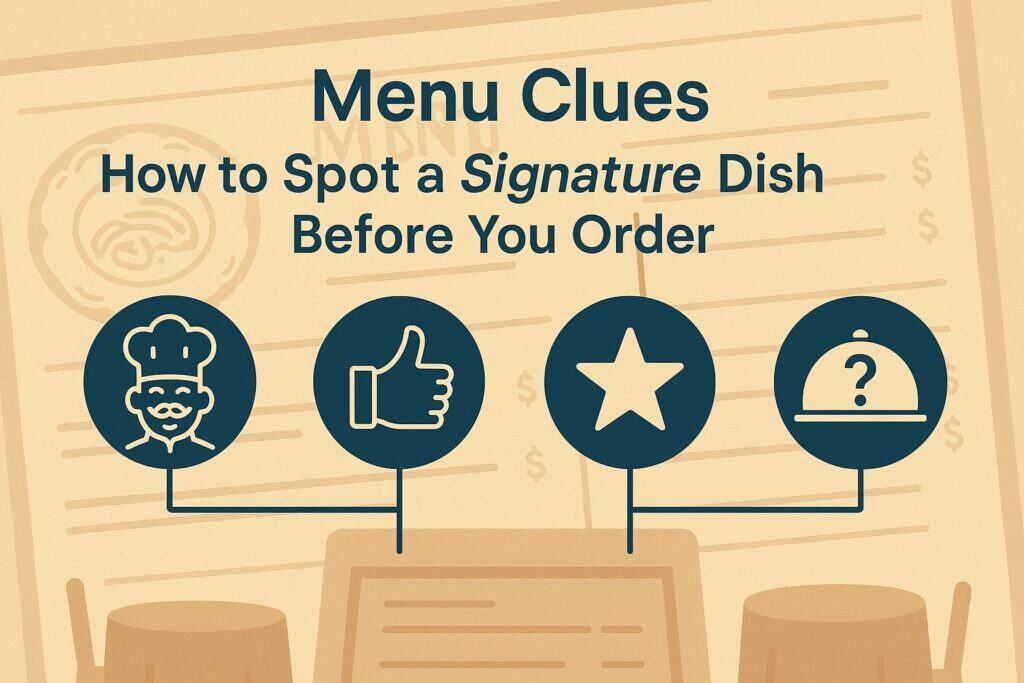
Before you talk to anyone, the menu itself is your first map to a restaurants signature dish. Most restaurants quietly highlight their signature dish through layout, typography, and language. If you know what to look for, the menu basically taps you on the shoulder and whispers, “Order this.”
Start by scanning for dishes that appear in a dedicated section like “House Specialties,” “Chef’s Favorites,” or “From the Dock” at coastal restaurants. These sections often hide the signature dish in plain sight.
In Delaware’s beach towns, you’ll frequently see special attention given to crab cakes, fresh catch of the day, or famous fries that have been served for decades.
Next, pay attention to repetition and storytelling. A dish described with more detail than the rest—mentioning local farms, specific fishing boats, or long-running family recipes—is often a restaurants signature dish.
If the menu spends extra words telling you where the clams came from, how long the recipe has been in the family, or why the sauce is unique, that’s a major clue.
Look, too, for subtle signposts like small icons (“chef hat,” “house special,” “local favorite”) or dishes that appear in more than one form.
For example, if a restaurant offers “boardwalk fries,” “loaded boardwalk fries,” and a sandwich that automatically comes with those same fries, those potatoes are probably a core signature.
Finally, consider the overall theme. A brewery that carefully lists which beers pair with which dishes is likely to highlight a signature burger, pretzel, or wings. A farm-to-table spot will showcase seasonal vegetable plates or mains that change with local harvests, and those rotating items often function as the evolving signature dish.
Reading Layout, Pricing, and Descriptions for Signature Dishes

Once you’ve scanned for obvious labels, start reading the menu layout like a puzzle that hides the restaurants signature dish. Designers know that certain areas of a menu attract more attention—especially the upper right corner and the center of the page. Many restaurants quietly place their signature dish in those visual “hot zones” where your eyes naturally land.
Pricing is another big clue. A restaurants signature dish isn’t always the most expensive item, but it rarely sits at the bargain end of the menu either. Instead, it often occupies the “sweet spot” of mid-to-high pricing, where the restaurant can afford better ingredients and more labor without scaring away diners.
In seafood-heavy areas of Delaware, you might see a crab cake entrée priced a bit higher than chicken or pasta; that difference often reflects both popularity and quality.
Descriptions matter just as much as layout and price. A simple listing like “grilled chicken – served with fries” probably isn’t the star.
But a detailed description that calls out “hand-cut fries fried in peanut oil, served since 1929 on the boardwalk” screams restaurant signature dish energy. That kind of storytelling is deliberate. It’s meant to make you feel like you’re joining a tradition, not just ordering dinner.
Pay attention to phrases like:
- “Our famous…”
- “House specialty”
- “Locals’ favorite”
- “What we’re known for”
- “Since 2026…”
When those phrases line up with prominent placement and confident pricing, you’ve probably found the restaurants signature dish.
Finally, cross-reference with your own priorities. If you love seafood, a heavily described crab-based entrée might be the better signature choice than a generic steak. The trick is to combine visual cues, pricing, and description with your personal tastes so that the restaurants signature dish also becomes your perfect meal.
Human Clues: Staff, Regulars, and Atmosphere
Even the best menu detective work has limits. To truly confirm a restaurants signature dish, you need human intel. Servers, bartenders, and even the people at the next table often know more about what the kitchen does best than the menu ever admits.
Start by observing the dining room. What are most people eating? If you’re near the coast, do you see the same style of fish tacos or baskets of fries hit table after table?
In a cozy spot in Newark or Dover, you might notice plates of chicken and slippery dumplings or big bowls of chowder dominating the room. Repeat appearances are a powerful sign that you’re looking at a restaurants signature dish.
Listen to how staff and guests talk about certain dishes. If you hear, “You have to try the fries here,” or “People drive in from out of town for this cake,” that dish likely holds signature status, even if the menu doesn’t formally label it.
The atmosphere around a signature dish feels a little electric—servers light up when someone orders it, and diners tend to snap photos before taking the first bite.
Bars and breweries are especially revealing. If you’re sitting at the bar, ask the bartender which dish they see ordered the most or what they personally grab after a shift. The dish that staff actually eat themselves is often the hidden signature dish, the one that reliably hits the spot after a long night of service.
Smart Questions to Ask About a Restaurants Signature Dish
The easiest way to find a restaurants signature dish is to simply ask—but how you ask makes a big difference. Instead of saying, “What’s good here?” try more focused questions that invite honest, specific answers.
You can start with:
- “If I could only try one dish here, what should it be?”
- “What dish do regulars come back for again and again?”
- “If a friend was visiting town for the first time, which dish would you tell them to order?”
These questions push the server to think beyond generic “everything’s good” responses and zero in on the true restaurant signature dish. If you’re in a coastal town, you might hear about a particular crab cake or fried fish sandwich.
In a small town café, the answer might be a from-scratch soup, a weekend brunch special, or a slice of house-made pie.
Listen for confidence in the response. When a server immediately names a dish and describes it with enthusiasm, that dish is almost certainly near the heart of the menu. If they hesitate or seem unsure, follow up with: “What do you personally order on your day off?” or “What’s the chef most proud of right now?”
Chefs often go through creative phases, and the current favorite may be a seasonal signature dish built around local corn, tomatoes, or shellfish.
Don’t be afraid to check how heavy or light the signature dish is, especially if you have a long drive home after a meal at the beach. Ask about spice levels, portion size, and whether the dish can be customized. A good restaurant will help you enjoy the restaurants signature dish in a way that fits your appetite and comfort level.
Digital Clues: Using Reviews and Social Media
Today, the internet is one of the most powerful tools for spotting a restaurants signature dish before you even step inside. Reviews, photos, and hashtags reveal patterns that menus may never mention.
If dozens of people post the same dish, rave about it by name, and share similar photos, you can safely assume you’ve found that restaurants signature dish.
Start with review platforms and map apps. Scan recent reviews, not just the star rating. Look for phrases like “You have to try their…” followed by the same dish again and again.
When you’re checking out places in Rehoboth, Lewes, or Bethany, you’ll often find guests repeatedly praising specific items like boardwalk fries, crab dishes, or unique desserts. Those recurring mentions are stronger evidence than a single “top dishes” list.
Photos are equally important. Click into the photo section and see what people actually upload. If you see ten different angles of the same burger, fries, or pasta, that dish is probably the restaurant’s unofficial signature dish, even if it isn’t labelled as such. Look for visual details: distinctive plating, recognizable baskets or containers, or branded paper used only for that dish.
Social media adds another layer. Search the restaurant’s location tag or branded hashtag. Scroll through posts from the last few months and note which dishes appear most often.
In a state where coastal tourism is huge, many restaurants rely on Instagrammable signature dishes—towering sundaes, piled-high fries, or bright seafood platters—to draw visitors. The most photogenic dish often overlaps with the restaurants signature dish.
What Delaware Foodies Reveal Online About Signature Dishes
Local food bloggers, community groups, and regional guides are goldmines when you’re hunting a restaurants signature dish in Delaware specifically. Because the state is compact, a single blog post or guide can cover multiple towns and call out signature dishes that locals consider essential.
Regional dining sites and tourism boards frequently highlight standout dishes like coastal seafood creations, chicken and slippery dumplings, scrapple fries, and classic boardwalk treats.
These lists often single out specific restaurants whose signature dishes have become part of the local identity, like iconic fry stands that have operated on the same boardwalk for generations.
Local Facebook groups or neighborhood forums are also useful. Search for “best crab cakes,” “best boardwalk fries,” or “where should I eat in Rehoboth” and look for recurring recommendations.
When multiple residents recommend the same dish over and over, you’re likely looking at a truly beloved restaurants signature dish, not a short-lived trend.
TikTok and short-form video play an increasingly big role. Food creators share quick clips of steaming crab boils, loaded fries, or creative desserts, often tagging the restaurant. When a video about a particular dish racks up local attention and the restaurant keeps that dish on the menu, it effectively becomes a modern signature dish.
Restaurants now track which items perform well on social media and double-down on those as their flagship offerings.
By combining reviews, photos, and local chatter, you can often pinpoint a restaurants signature dish before you even choose your parking spot. That means you arrive with a plan, ready to order the dish that gives you the best snapshot of the restaurant’s personality and the local food scene.
Local Flavor: Typical Signature Dishes in Delaware Restaurants
To truly understand how to spot a restaurants signature dish here, it helps to know the types of plates that frequently play that role. Local ingredients and traditions shape what becomes a signature dish, especially in a region with beaches, farms, and historic small towns.
Along the coast, restaurants often build their identity around seafood: blue crab cakes, fresh oysters, fish sandwiches, and shrimp dishes anchored in the day’s catch.
Many coastal spots proudly mention that their seafood comes from nearby waters, and tourism sites consistently highlight coastal restaurants where the signature dish is all about fresh seafood and ocean views.
Boardwalk fries are another powerful example. Certain stands have turned simple fries into an iconic restaurant signature dish by serving them in distinctive buckets, using specific oil, and sticking to the same recipe for decades.
When a place sells virtually nothing but fries and has lines stretching down the boardwalk, there’s no doubt what the signature dish is.
Inland and small-town restaurants lean into comfort foods that have deep regional roots. Chicken and slippery dumplings, scrapple, and hearty casseroles often become signature dishes because they evoke home cooking and nostalgia.
Articles on regional cuisine frequently describe slippery dumplings as a defining local staple—making them a natural choice for restaurants that want a recognizable, tradition-friendly signature dish.
Beach Town Signatures, Farm-to-Table Favorites, and Comfort Classics
Beach towns like Rehoboth, Bethany, and Fenwick Island are packed with restaurants where the restaurants signature dish is as much an experience as a recipe.
Boardwalk staples such as fries splashed with vinegar, saltwater taffy, and creative ice cream flavors all function like signature dishes for their respective stands. People schedule entire afternoons around grabbing that one favorite item.
Further inland, the rise of farm-to-table dining has reshaped what counts as a restaurant signature dish. Many chefs work closely with local farms and farmers’ markets, building seasonal menus that change week to week.
In these spots, the signature dish might not be a single static plate but a rotating feature: seasonal vegetable risottos, local pork with orchard fruits, or salads built entirely from nearby fields. Restaurant guides often highlight the state’s farm-to-table restaurants as destinations where fresh, locally sourced dishes are the main attraction.
Comfort classics still hold strong. Diners and casual restaurants may treat scrapple, fried chicken, or chicken and slippery dumplings as their restaurants signature dish, especially if the recipe has remained in the family for generations.
Local articles frequently reference these dishes as part of the culinary identity, which encourages restaurants to proudly feature them as key menu items.
When you visit a new restaurant, look for these familiar patterns. Is the place leaning into boardwalk nostalgia, coastal seafood, farm-fresh plates, or old-school comfort food? Once you recognize the theme, the restaurants signature dish often becomes obvious.
Matching the Signature Dish to Your Diet and Occasion
Finding a restaurants signature dish is only half the battle. The other half is making sure that signature dish fits your lifestyle, dietary needs, and the occasion. A rich plate of fried seafood might be the restaurants signature dish, but it won’t feel great if you’re looking for something light before an evening walk on the beach.
Start by clarifying your priorities for that meal. Are you celebrating a birthday, grabbing a quick bite after work, or meeting friends for a long, lazy lunch?
For celebrations, you might lean into the most indulgent restaurant signature dish on the menu, like a massive seafood platter or a decadent dessert. For everyday dining, you may prefer a lighter, yet still representative, signature dish such as a grilled fish entrée or a seasonal salad with local cheese and vegetables.
Next, consider your dietary restrictions. If you’re avoiding gluten, dairy, or certain allergens, ask whether the restaurants signature dish can be modified. Coastal fries might be perfect if they’re cooked in dedicated peanut oil and not cross-contaminated with breaded items, while crab cakes may need gluten-free breadcrumbs or a lettuce wrap instead of a bun.
Many farm-to-table restaurants already design their signature dishes to accommodate various diets, making it easier to enjoy their core specialties without feeling left out.
It’s also smart to weigh portion size. Some signature dishes are purposely big enough to share—think buckets of fries, giant pretzels, or sampler platters. In those cases, you can experience the restaurants signature dish by splitting it with the table and ordering smaller individual plates to balance things out.
How to Choose the Right Signature Dish for Your Preferences
To choose the right restaurants signature dish for you, combine all the clues you’ve gathered with a quick personal checklist. Start by asking: “What ingredient or style do I actually enjoy most?” If you don’t love fried food, you might skip a famous fry basket and instead hunt for a grilled seafood or vegetable-forward signature dish that better matches your taste.
Use your research. If online reviews rave about two different dishes—say, crab cakes and a seasonal risotto—compare them to your current mood, budget, and hunger level. A heavy dish might be perfect after a day exploring the beaches, while a lighter plate may pair better with a brewery visit or a long evening drive home.
When in doubt, think in terms of “first impression” versus “future visits.” On your first visit, choosing the restaurant’s most talked-about signature dish gives you the clearest sense of what the place is about.
On repeat visits, you can explore secondary favorites or limited-time specials. That way, you balance the reliable appeal of a restaurant signature dish with the fun of trying something new. Don’t underestimate beverage pairings either. At breweries and pubs, staff often recommend specific beers with their signature dish.
Farm-to-table restaurants may suggest local wines or house-made mocktails that complement the flavors. Taking those pairings seriously can turn a good restaurant signature dish into a full memorable experience.
Ultimately, the right signature dish is where your preferences and the restaurant’s strengths intersect. When those two align, you get the most satisfying, authentic, and delicious version of what that restaurant has to offer.
Future of Signature Dishes: Tech, Trends, and Innovation
The idea of a restaurants signature dish isn’t static. It’s evolving alongside technology, social media, and changing diner expectations. In recent years, restaurants have begun using online ordering data, customer feedback platforms, and social media metrics to identify which dishes should become or remain their signature offerings.
Nationwide surveys of chefs and restaurateurs suggest that trends like regional comfort foods, globally inspired flavors, and visually striking dishes are shaping what becomes a modern restaurant signature dish.
Tools like TikTok, Instagram, and delivery apps make it easy to see which dishes get shared, re-ordered, and reviewed most often.
Locally, that means restaurants might test limited-time specials built around Delaware ingredients—like seasonal corn, peaches, or shellfish—and then “promote” the highest-performing special into a permanent signature dish.
A plate that goes viral on social media or sells out consistently during a festival can quickly become the centerpiece of a menu.
Technology also allows for more dynamic menus. Digital boards and QR-code menus let restaurants adjust descriptions, pricing, and featured items in real time.
A restaurant could highlight a new potential signature dish for a few weeks, track sales and reviews, then decide whether it deserves a permanent slot next to classic favorites like boardwalk fries or chicken and slippery dumplings.
How Menus and Signature Dishes Will Evolve in the Next 5–10 Years
Looking ahead, the restaurants signature dish is likely to become even more data-driven and interactive. As point-of-sale systems and reservation platforms grow more sophisticated, restaurants will have better insight into what guests order, what they leave on the plate, and which dishes generate the most positive reviews. That data will shape future restaurant signature dishes.
We can expect more hyper-local signatures: dishes built around ingredients from specific farms, fisheries, or producers, proudly named on the menu.
Farm-to-table restaurants already do this, but in the next decade, even casual spots may treat a local potato, cheese, or sausage as part of their restaurant signature dish identity. Delaware’s strong agriculture and seafood connections make it especially likely that future signatures will emphasize traceability and sustainability.
Plant-forward and allergen-aware signature dishes are also on the rise. As more guests seek vegetarian, vegan, or gluten-free options, restaurants will elevate those plates from afterthoughts to core offerings. In time, a fully vegan entrée or a gluten-free dessert could become a restaurants signature dish, rather than just a niche alternative.
On the tech side, augmented reality and interactive menus may let diners preview a restaurants signature dish in 3D, read its story, or watch a short video of it being made.
Social features—like seeing how many people ordered that dish this week—could further encourage guests to choose the most popular restaurant signature dish and join the “club” of people who have tried it.
Despite these changes, one thing will stay the same: a restaurants signature dish will still be the plate that best expresses the chef’s vision, the local character, and the kind of experience the restaurant wants to create. Technology will just make it easier to discover and refine that dish.
Evaluating a Signature Dish Like a Food Critic
Once the restaurants signature dish lands on your table, your job shifts from detective to critic. Evaluating it thoughtfully helps you decide whether the restaurant lives up to its reputation and whether you’ll recommend that restaurants signature dish to friends and family.
Start with appearance. Does the dish look intentional and appetizing, or sloppy and rushed? A true restaurant signature dish usually arrives with consistent plating: crisp fries piled in a specific container, crab cakes with carefully arranged sides, or dumplings nestled in a rich, steaming broth. Signature dishes don’t have to be fancy, but they should look deliberate and inviting.
Next, focus on aroma. Before you dig in, take a moment to notice the smell. With seafood, you want a fresh, ocean-clean aroma, not anything overly fishy. For fried foods, the scent should be warm and savory, not stale or heavy. Comfort dishes like chicken and slippery dumplings should smell like home cooking—rich, savory, and comforting without being overwhelming.
Texture is just as crucial. Boardwalk fries should be crisp on the outside and fluffy on the inside; dumplings should be tender but not mushy; crab cakes should balance a lightly crisp crust with a moist, flavorful interior. If a restaurants signature dish fails on texture, there may be deeper issues with timing, equipment, or consistency.
Flavor is the final test. A restaurants signature dish should taste balanced and memorable. Salt, spice, acidity, and richness should feel intentional, not random. If the dish is famous for its seasoning or sauce, that element should feel distinctive but not overpowering.
Ask yourself: “Would I come back just to eat this again?” If the answer is yes, you’ve likely experienced a restaurant signature dish worthy of its reputation.
Don’t forget service and context. Part of evaluating a restaurants signature dish is understanding how it fits into the overall experience. Friendly explanations, thoughtful pairings, and timely delivery all enhance the impact of that dish.
When everything lines up—taste, texture, story, and setting—you’ve found a signature dish that truly represents the restaurant at its best.
FAQs
Q.1: How do I quickly find a restaurants signature dish when I’m short on time?
Answer: If you’re in a hurry but still want the restaurants signature dish, combine three fast tactics. First, scan the menu for sections labeled “House Specialties” or “Chef’s Favorites,” paying special attention to any dishes with longer descriptions or references to local farms and seafood.
Second, quickly check a review app and scroll the latest photos—look for the same dish showing up over and over, especially in recent months. Third, ask your server one pointed question: “If I could only order one dish that this place is known for, what should it be?”
These steps work especially well when you’re visiting beach towns or popular dining areas and don’t have time to analyze every option. The combination of menu clues, real-time review patterns, and staff insight usually reveals the restaurants signature dish in just a few minutes.
Q.2: Can a restaurant have more than one signature dish?
Answer: Absolutely. Many places have a primary restaurants signature dish and one or two secondary favorites. A coastal place might be famous for both its fries and its crab cakes, while a farm-to-table restaurant might treat both a seasonal vegetable plate and a rotating meat entrée as signature dishes.
In practice, this means you might hear regulars debate which dish is “the” restaurant signature dish, and that’s okay. When you see multiple dishes mentioned repeatedly online and highlighted on the menu, think of them as a small signature family.
You can either choose the one that best fits your mood and diet, or visit the restaurant more than once to try each signature dish in turn.
Q.3: Are signature dishes always the most expensive items on the menu?
Answer: No. While some restaurants signature dishes are premium, many are surprisingly affordable. Boardwalk fries, scrapple dishes, and certain comfort foods are classic examples of signature dishes that sit in the mid-range or even lower end of the menu pricing. The key isn’t price alone, but the combination of popularity, history, and the restaurant’s pride in that dish.
That said, a restaurant won’t usually make its signature dish the cheapest item if it uses high-quality ingredients or takes extra labor. Look for dishes in the middle or upper middle of the price range, and then use descriptions and staff recommendations to confirm whether they’re truly the restaurant signature dish.
Q.4: How do dietary restrictions affect my ability to enjoy a restaurants signature dish?
Answer: Dietary restrictions don’t mean you have to miss out on a restaurants signature dish. Many modern restaurants are prepared to adapt their signatures to gluten-free, dairy-free, or vegetarian versions where possible.
Ask whether the restaurants signature dish can be modified—maybe swapping a bun, adjusting a sauce, or changing a side.
If a traditional signature dish truly can’t be altered without losing its essence (for example, a crab-heavy dish when you’re allergic to shellfish), ask staff to recommend the “closest cousin”—another dish that reflects the same style or ingredients but suits your needs better.
Over time, more restaurants are creating plant-based and allergen-friendly signature dishes that stand proudly alongside classic ones, so your options will only improve in the future.
Q.5: What if I order the signature dish and don’t like it?
Answer: Even a famous restaurants signature dish won’t please everyone. If you find that the restaurant signature dish just isn’t your style—maybe it’s richer, spicier, or heavier than you expected—try to separate personal taste from execution. Ask yourself whether the dish seems well-made for what it is, even if it’s not your favorite flavor profile.
If there’s a genuine problem with temperature, seasoning, or quality, politely let your server know. Good restaurants want feedback about their signature dish because their reputation depends on it.
On a return visit, you can always try another popular option or a special that better fits your preferences, using your experience to refine what you order next time.
Conclusion
Learning how to spot a restaurants signature dish turns ordinary dining into something more intentional and rewarding. Instead of randomly guessing at the menu, you read clues in the layout, pricing, and descriptions.
You listen to servers, watch what regulars order, and use online reviews and photos to confirm which dish truly anchors the restaurant’s identity.
In a place with a rich mix of boardwalk stands, seafood houses, farm-to-table restaurants, diners, and breweries, the restaurants signature dish often reflects local ingredients and traditions—crisp fries on the boardwalk, comforting slippery dumplings, or creative plates built from nearby farms.
By choosing the restaurants signature dish thoughtfully, you get a deeper taste of local flavor and a better sense of what the chef and team care about most.
As technology reshapes how restaurants test and elevate their best dishes, you’ll see even more distinctive, data-informed signature dishes emerge—some built around classic comfort food, others around plant-based or allergen-friendly recipes.
No matter how menus evolve, the basic strategy remains the same: combine menu analysis, human insight, and digital research to find the plate that defines the restaurant.
The next time you sit down to eat—whether it’s a casual night out or a special trip to the coast—treat yourself to the restaurants signature dish. When you know how to spot it and how to judge it, every meal has the potential to feel like a curated, memorable experience instead of just another order off the menu.