Restaurant Startup Checklist for Delaware Business Owners
Starting a restaurant is exciting—and in Delaware, it’s also very process-driven. A strong restaurant startup checklist helps Delaware business owners avoid delays, budget surprises, and compliance issues that can derail an opening. This guide walks through the full restaurant startup checklist for Delaware business owners, from concept to permits, hiring, operations, and a few forward-looking trends shaping the next few years.
Throughout this article, you’ll see repeatable steps you can literally turn into your own restaurant startup checklist. Keep it practical: document decisions, save receipts, track deadlines, and build your opening timeline backward from your desired launch date.
1) Validate Your Concept With Delaware-Specific Market Proof

A restaurant startup checklist should start long before you sign a lease. Delaware business owners often underestimate how quickly costs and timelines expand once a location is chosen. Early validation reduces expensive pivots later.
Instead of only asking “Do people like my idea?”, validate who will buy, how often, and why they’ll choose you over established options.
Look at daypart demand (breakfast, lunch, late-night), seasonal traffic (beach season areas vs. commuter zones), and local competition density. Use public signals like peak hours, review themes, and menu pricing patterns to estimate your realistic average check.
1.1 Define a “Win” Profile: Guests, Occasions, and Price Bands
A useful restaurant startup checklist for Delaware business owners includes a clear “win” definition: target guest, top 3 occasions (weekday lunch, family dinner, post-work drinks), and a price band that fits the local wallet.
If your concept depends on tourism, build your plan around off-season survival. If it depends on office traffic, test your lunchtime throughput assumptions.
Write a one-page positioning statement: what you serve, who it’s for, what makes it different, and why it belongs in that neighborhood. Tie that statement to a short menu “prototype” with 12–20 hero items.
A tight prototype makes costing and permitting easier later because you’re not redesigning everything after equipment is ordered.
Also, validate operational complexity. A concept can be popular but operationally fragile. Ask: can a small team execute consistently? Can you prep safely? Can you hold food properly? These questions connect directly to your later food safety steps and inspections under Delaware’s food establishment oversight.
1.2 Build a Conservative Financial Model With Opening-Day Reality
A strong restaurant startup checklist includes a financial model that assumes delays. Delaware restaurant startups commonly face schedule shifts around buildout, inspections, and licensing. Plan with conservative scenarios: “best,” “expected,” and “delayed by 60–90 days.”
Model your startup costs in buckets: lease + deposits, architectural/design, construction, equipment, smallwares, technology, initial inventory, training payroll, marketing, and professional fees. Then add a contingency line. Your working capital should cover payroll, utilities, insurance, and inventory for multiple months, not weeks.
Your revenue model should reflect realistic seat turns and takeout mix. If you plan alcohol service, include an alcohol mix model—but do not assume liquor revenue “saves” the business. Liquor licensing has its own approvals and timelines through Delaware’s alcohol licensing authority, and requirements differ by license type.
2) Form Your Business Correctly and Build Your “Legal Folder”
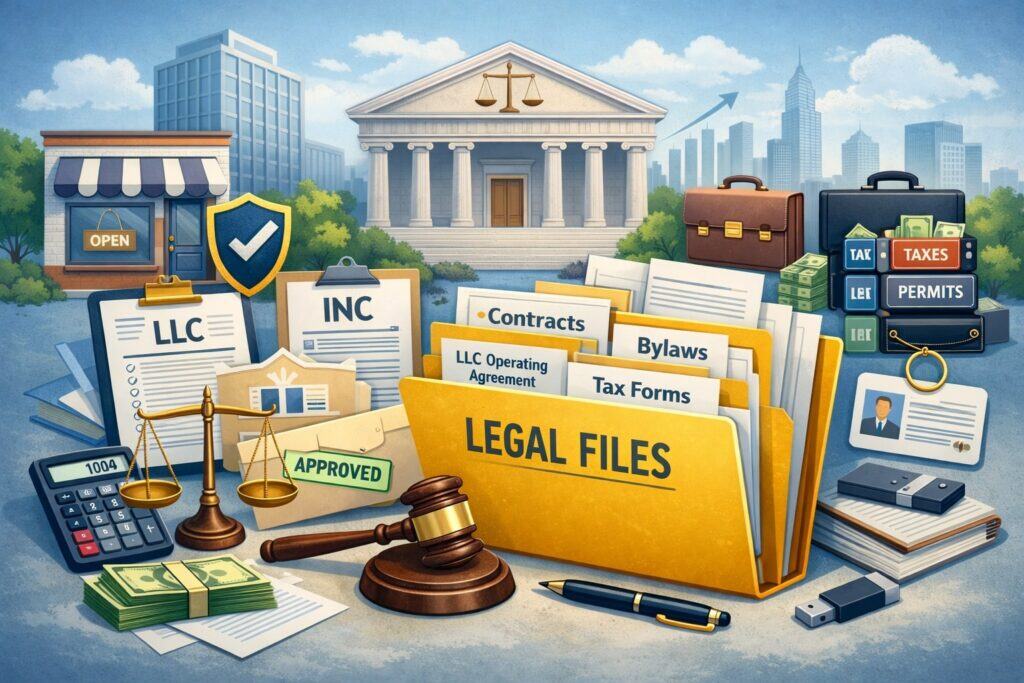
Your restaurant startup checklist for Delaware business owners should include a “legal folder” (digital + printed) that stores every license, permit, inspection record, insurance policy, lease document, and vendor agreement. This folder becomes critical when you apply for permits, change ownership, or sell the business.
Delaware business owners typically choose an LLC or corporation for liability and tax planning, but your best structure depends on partners, investment plans, and how you’ll handle payroll and distributions. Document ownership percentages, decision rights, and what happens if a partner exits.
2.1 Put Entity, Ownership, and Banking in Place Before Leasing
A restaurant startup checklist should treat entity setup as a gating step. Create the entity, obtain your tax IDs (as applicable), open a dedicated business bank account, and set up bookkeeping categories designed for restaurants (COGS broken out, prime cost tracking, marketing, repairs, delivery fees).
This prevents personal and business transactions from mixing—which becomes a serious problem during audits, financing, or disputes.
Your lease negotiations should not get ahead of your structure. If the lease is signed in a personal name, you can introduce risk and complexity later.
Work with qualified counsel for the lease, especially around HVAC obligations, grease interceptors, venting rights, hours of operation, signage, and tenant improvement responsibilities—these items can materially impact restaurant buildout cost and permitting time.
Also, confirm you can obtain required approvals in that space. Delaware restaurant compliance is not only “state-level.” Local rules and property conditions matter. Your restaurant startup checklist should include a formal “site feasibility” step before the lease becomes final.
2.2 Build Compliance Documentation That Supports Inspections and Licensing
A practical restaurant startup checklist for Delaware business owners includes a repeatable set of documents:
- Written concept + menu prototype
- Floor plan + equipment list
- Vendor list + food sourcing plan
- Cleaning schedule + pest control plan
- Employee training plan (food safety, allergen awareness, sanitation)
- Temperature logs and corrective actions
These documents are not busywork. They support food safety expectations overseen through Delaware’s public health and food protection functions, which include regulatory foundations, inspections, and complaint/outbreak response.
When inspections happen, inspectors often expect you to demonstrate control, not just “good intentions.” A documented system helps you pass inspections faster and reduces reinspection risk.
3) Choose the Right Location and Clear Zoning + Buildout Constraints
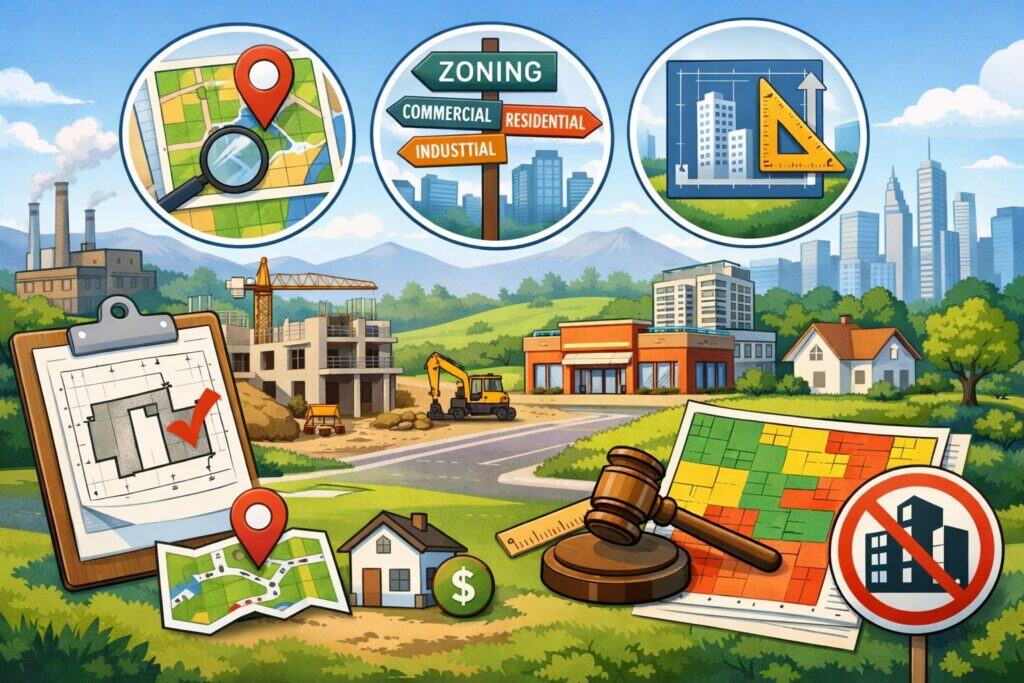
Location is where many restaurant startup checklists fail. Delaware business owners often focus on rent and traffic, but “can this space legally and mechanically become my restaurant?” is the real question.
Before committing, verify zoning/allowable use, seating capacity potential, parking constraints, and whether the building can support your cooking method. Venting, fire suppression, grease management, and utility capacity can turn a “great deal” into a budget sink.
3.1 Perform a Site Feasibility Audit Before You Sign Anything
A restaurant startup checklist should include a site feasibility audit: a walkthrough with a contractor experienced in restaurant buildouts plus a quick review with your design professional. Confirm:
- Hood/vent feasibility and roof access
- Grease interceptor presence/requirements
- Electrical capacity for refrigeration and hot line
- Plumbing and floor drain realities
- ADA pathway and restroom feasibility
- Waste management and pickup logistics
If alcohol is part of your plan, evaluate community impact and potential objections early. Licensing bodies consider location-specific factors and modifications to premises can require approvals and inspections.
This step protects your timeline. Your restaurant startup checklist should treat site feasibility as “pass/fail,” not “we’ll fix it later.”
3.2 Map Your Timeline Backward From “First Guest Served”
Delaware restaurant openings succeed when they use backward planning. Choose a target opening date, then map:
- Buildout completion + punch list
- Equipment installation and testing
- Deep cleaning + pest prevention
- Staff hiring + training weeks
- Soft opening schedule
- Permit approvals + inspections buffer
Your restaurant startup checklist should include buffers because inspections and approvals may not occur exactly when you want. Plan parallel workstreams: while buildout happens, you can finalize vendor accounts, build your training materials, and set up payroll.
4) Get Your Core Delaware Licenses in the Correct Order
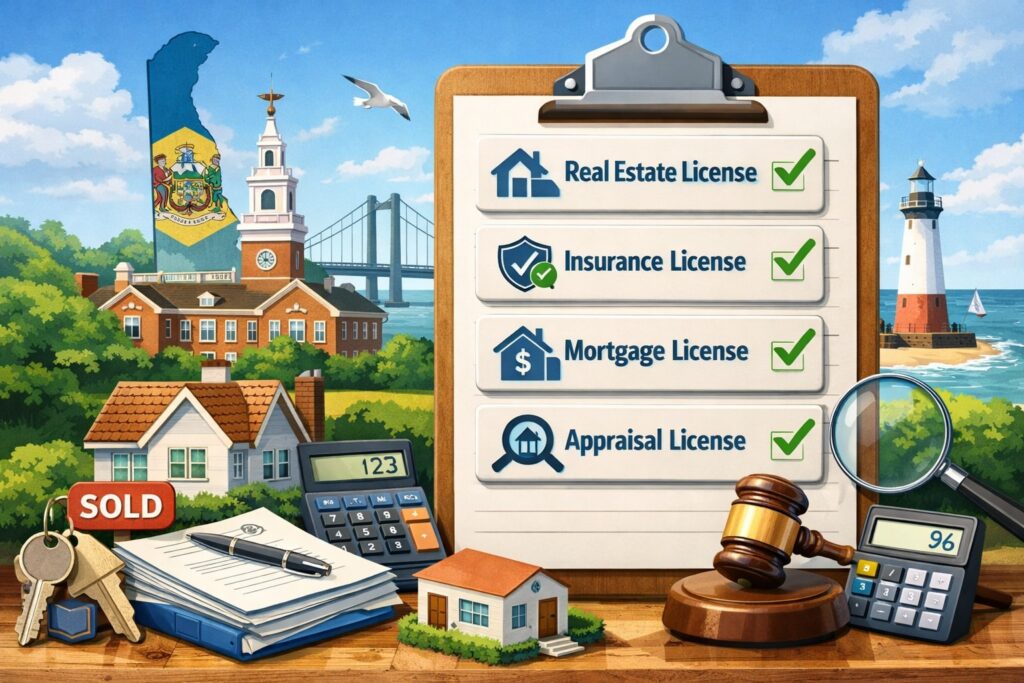
A restaurant startup checklist for Delaware business owners must prioritize licensing order. Delaware’s official business-first-steps guidance emphasizes that even if you don’t need a specific permit, you still typically need a Delaware General Business License if you plan to operate in Delaware.
Many delays happen when owners chase the wrong license first—or start spending heavily before confirming that required licenses can be issued.
4.1 Delaware General Business License and Tax Setup
Your restaurant startup checklist should include the Delaware General Business License early, because it’s foundational for operating legally and often ties into other registrations. The state’s guidance is clear that food businesses still need this general license.
Set up your tax collection and reporting processes from day one. Restaurants handle high transaction volumes; small errors compound quickly. Build a monthly “tax close” routine that reconciles POS sales, cash deposits, refunds/voids, and chargebacks. Your accountant will thank you, and you’ll reduce audit risk.
Even if you outsource payroll or bookkeeping, you still need internal controls. Your restaurant startup checklist should assign a specific person to approve invoices, reconcile bank accounts, and verify payroll accuracy.
4.2 Licenses That Vary by County/City and Operational Choices
A Delaware restaurant startup checklist should include local requirements based on your county/city and your operation type. Food trucks, bakeries, catering, and restaurants can follow different paths. Delaware’s business-first-steps resource for food establishments highlights that restaurants and other food operations may need a Food Establishment permit, and points you to the right place to start.
Also list “optional but high-impact” licenses and registrations, such as signage approvals, outdoor seating permissions, and entertainment/music licensing if you plan live performances. These aren’t always obvious at first, but they affect layout, noise, hours, and neighborhood acceptance.
5) Food Establishment Permits, Food Safety Systems, and Inspections
This is a core section of any restaurant startup checklist for Delaware business owners. Food safety is not just “pass an inspection.” It’s a system you run daily.
Delaware’s public health structure includes an Office of Food Protection and related functions focused on retail food safety oversight, including compliance monitoring and investigations.
5.1 Start With Delaware’s Food Establishment Pathway
Your restaurant startup checklist should explicitly include the Food Establishment permitting pathway. Delaware’s official “First Steps” guidance for food establishments explains that many food businesses need a Food Establishment permit, and reiterates that you still need the general business license.
Treat permitting as a project: collect your menu, process flow, equipment list, and floor plan in one place. Your menu impacts safety requirements—raw animal products, cooling and reheating steps, and allergen handling all change what systems you need.
Plan your opening training around real inspection expectations: handwashing compliance, sanitizer concentration, temperature logs, cold holding, hot holding, cross-contamination prevention, and cleaning schedules. Create simple checklists staff can actually follow during a rush.
Also, set up a method to pay and renew permits on time. Delaware’s food protection functions include online payment pathways for annual permit payments, which makes renewal less painful if you keep your account organized.
5.2 Build a Food Safety Culture That Prevents Reinspection Cycles
A restaurant startup checklist shouldn’t stop at “get the permit.” You need a culture. Write SOPs that match your menu and equipment. Keep them short. Use photos. Train with quick drills.
Start with the highest-risk moments: receiving deliveries, cooling, reheating, and allergen cross-contact. Then create daily routines: opening line check, mid-shift temp verification, and closing sanitation. Assign accountability by role (line cook, prep, dish, manager).
Use a “no blame, fix fast” policy. If someone reports a cooler running warm, reward the report—don’t punish it. This prevents hidden problems that become inspection failures.
In Delaware, food safety oversight emphasizes reducing foodborne illness risks and ensuring regulatory compliance foundations are science-based. That means your restaurant startup checklist should aim beyond passing one inspection and toward repeatable compliance.
6) Alcohol Service: Licensing, Layout, and Operational Controls
If alcohol is part of your concept, your restaurant startup checklist for Delaware business owners needs a dedicated workstream. Delaware’s Office of the Alcoholic Beverage Control Commissioner (OABCC) considers liquor license applications, inspections, modifications, and renewals.
Alcohol planning also affects layout (bar, storage, security), staffing (server training), and marketing (happy hour compliance considerations).
6.1 Choose the Right License Strategy and Plan for Reviews
Your restaurant startup checklist should begin with license strategy: what license type fits your service model (restaurant vs. tavern vs. other categories) and what operational constraints come with it. Delaware’s liquor-license “First Steps” page directs restaurants and other alcohol-serving businesses to OABCC for licensing, renewals, and approvals.
Treat licensing as a timeline risk. Build it into your backward plan. Gather documents early: entity info, lease, floor plan, and any required notices. If you are modifying an existing licensed space, you may need approvals for changes.
Also, design your alcohol program with cost control from the start. Many new operators lose profits to overpouring, theft, compressed drinks, and weak inventory routines. Put bar controls into your restaurant startup checklist: pour standards, inventory counts, locked storage, and POS permissions.
6.2 Implement Responsible Service, Training, and Compliance Tracking
A Delaware-focused restaurant startup checklist should include responsible alcohol service training and written policies. Your goal is consistent compliance, not just “avoid trouble.” Establish ID-check rules, cut-off procedures, incident logging, and manager escalation steps.
Operationally, connect alcohol controls to technology: require every drink to be rung in, restrict voids, track comps, and review nightly sales mix. Use weekly variance checks (purchases vs. theoretical usage vs. sales). This is where small leaks become huge.
From a future-proofing standpoint, expect more digital auditing and tighter expectations around documentation and operational transparency. If your restaurant startup checklist includes clean records now, expansions and renewals become easier later.
7) Hiring, HR Compliance, and Payroll Setup for Restaurant Teams
Staffing is often the biggest controllable cost—and the biggest guest experience driver. A modern restaurant startup checklist for Delaware business owners must include employer registration steps and a clean onboarding process.
Delaware’s One Stop guidance indicates that if you’re about to hire employees, you’ll need to register as an employer with Delaware’s unemployment insurance division (with a liability determination form) and also register with Delaware’s Division of Workers’ Compensation.
7.1 Build Your Hiring Plan Around Roles, Not Just Headcount
A restaurant startup checklist should define roles and workflows first, then headcount. Start by mapping a normal Friday night and a normal Tuesday lunch. Identify stations, responsibilities, and manager coverage.
Write simple job scorecards: duties, skills, schedule expectations, and what “good” looks like in 30 days. Then build interview scripts around real scenarios (late ticket times, guest complaints, allergy requests). This improves hiring accuracy and reduces churn.
Plan training as a paid investment, not an afterthought. Include shadow shifts, food safety basics, service steps, and POS drills. When training is rushed, mistakes show up in comps, refunds, negative reviews, and safety violations.
Also, include required postings and documentation workflows in your restaurant startup checklist. Restaurants move fast; paperwork must be standardized or it won’t happen reliably.
7.2 Complete Delaware Employer Requirements and New Hire Reporting
Your restaurant startup checklist for Delaware business owners should include these employer compliance tasks:
- Register as an employer for unemployment insurance through Delaware’s system as described in One Stop guidance
- Register with the Division of Workers’ Compensation (as referenced in One Stop guidance)
- Report new hires within required timelines
Delaware’s new hire reporting materials state employers must report newly hired employees within 20 days of hire, and cite legal authority including federal law and Delaware code references.
Put this into your onboarding checklist so it’s never missed. Assign one person responsibility and create a recurring weekly admin block to process hires, terminations, and documentation.
8) Payments, POS, and Controls That Protect Your Profit
Your restaurant startup checklist isn’t complete without a payment stack plan. Payments directly impact margin, cash flow, fraud exposure, and operational speed. For Delaware business owners, the right setup also reduces chargebacks and reconciliation headaches.
You should decide early whether you want a traditional POS, cloud POS, handheld ordering, kiosk, online ordering, or a hybrid. Then choose a payment processing setup that can support your service model and volume.
8.1 Build a Payment Workflow That Matches Your Service Style
A restaurant startup checklist should align payment experience with the guest journey. Table service may benefit from pay-at-table or handhelds. Quick service may prioritize speed and lower labor. Takeout-heavy concepts need a strong online ordering path with clean ticket routing.
Map every payment scenario: dine-in, takeout, delivery partner orders, refunds, comps, tips, split checks, gift cards, and catering deposits. Every one of those scenarios must be configured before opening week, or you’ll lose money in confusion.
Also include security basics: strong passwords, role-based access, and clear rules around manual card entry. Make sure batch settlement timing and deposit timing are understood so cash flow isn’t a surprise.
8.2 Set Up Daily and Weekly Controls: Reconciliation, Fraud, and Chargebacks
A Delaware restaurant startup checklist should include financial controls that happen on repeat:
- Daily closeout report reconciliation
- Cash drawer counts and variance log
- Tip review and payout rules
- Refund approval policy
- Weekly product mix and labor % review
Chargebacks can quietly erode profit. Reduce them with clear receipts, accurate descriptors, consistent refund handling, and customer communication for disputes. Use order confirmation logs for online orders and maintain proof of service.
Future prediction: expect more data-driven compliance and fraud detection built into payment systems. Restaurants that keep clean data—consistent item naming, accurate tips, correct tax configuration—will benefit more from automation and analytics over the next few years.
FAQs
Q.1: What is the first step on a restaurant startup checklist in Delaware?
Answer: The first step on a restaurant startup checklist for Delaware business owners is concept validation tied to a realistic financial model and a site feasibility plan. Before you sign a lease, confirm your guest profile, pricing, and operational complexity.
Then verify the location can support your kitchen needs (venting, grease, utilities) and that your timeline includes buffers for inspections and licensing. This approach prevents you from getting trapped in a costly space that can’t be permitted or built as planned.
From there, move into entity setup and your “legal folder,” so every permit and inspection document stays organized from day one. This is especially important because Delaware’s official guidance emphasizes foundational licensing like the Delaware General Business License for businesses operating in the state.
Q.2: Do Delaware restaurant owners always need a Food Establishment permit?
Answer: Many restaurant and food operations will need a Food Establishment permit, and Delaware’s “First Steps” resource for food establishments helps operators identify the correct pathway.
It also notes that even if a business may not need a specific food establishment permit, it still typically needs the Delaware General Business License to operate in Delaware.
Because requirements can vary based on the type of food operation, your restaurant startup checklist should treat this as an early research step and build your plan around your specific menu and service style.
Q.3: Which Delaware agency handles liquor licenses for restaurants?
Answer: Liquor licensing is handled through Delaware’s Office of the Alcoholic Beverage Control Commissioner (OABCC). The OABCC considers liquor license applications, performs inspections, addresses modifications, and grants renewals.
If alcohol is part of your plan, add a dedicated liquor-license workstream to your restaurant startup checklist for Delaware business owners and plan for additional documentation and timeline buffers.
Q.4: What employer registrations should Delaware restaurant owners plan for when hiring?
Answer: Delaware’s One Stop guidance states that if you’re hiring employees, you will need to register as an employer with the Division of Unemployment Insurance and also register with the Division of Workers’ Compensation.
Additionally, Delaware’s new hire reporting materials state that employers must report newly hired employees within 20 days of hire.
A strong restaurant startup checklist builds these steps into onboarding so they’re not missed during a busy opening.
Conclusion
A restaurant startup checklist for Delaware business owners works best when it’s treated as a living system, not a one-time document. Your goal is to open legally, safely, and profitably—without betting everything on perfect timing.
If you remember only a few priorities, make them these:
- Validate concept + finances before leasing
- Run a site feasibility audit to avoid buildout surprises
- Secure core licensing in the correct order, starting with foundational requirements like the Delaware General Business License
- Build food safety systems that support inspections and daily execution, aligned with Delaware’s food protection oversight
- If serving alcohol, plan licensing and controls around OABCC oversight
- Set up employer registrations and new hire reporting steps before you staff up
Finally, keep an eye on what’s next: more automation in payments and inventory, more documentation expectations, and more guests choosing restaurants based on trust (cleanliness, transparency, allergen safety) as much as taste. When your restaurant startup checklist is detailed and disciplined, you don’t just open—you build a restaurant that can last.